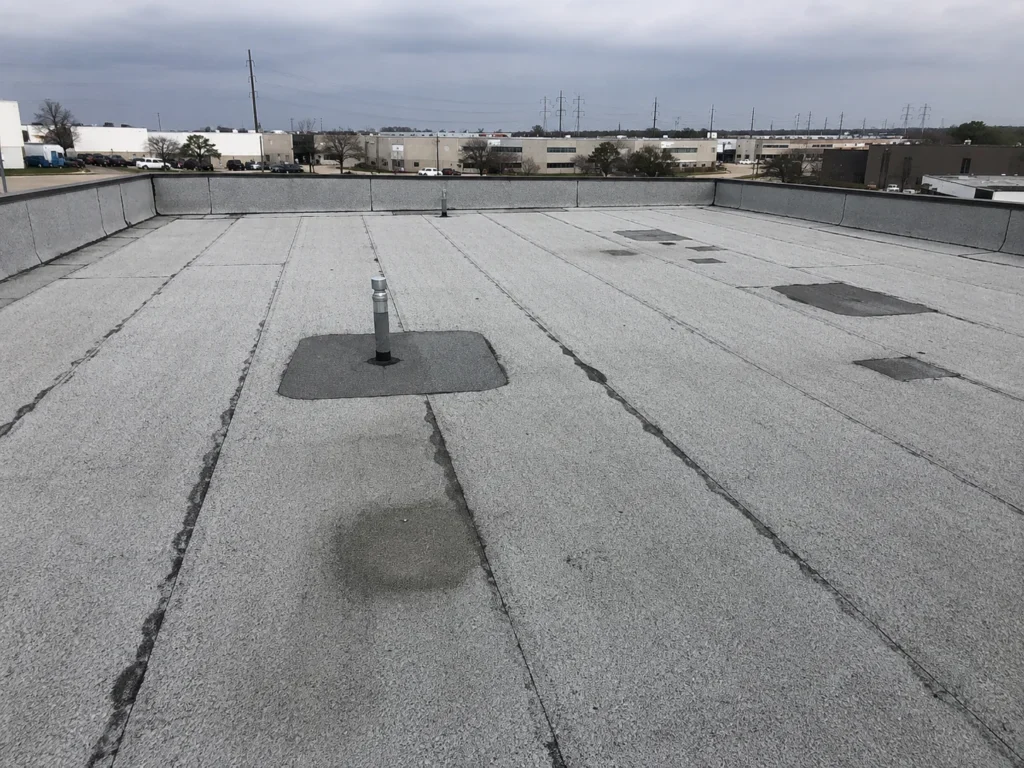
Modified bitumen argues for itself with layers. Two or more plies of polymer-modified asphalt give a Fort Worth building a roof with backup, so a puncture has to beat redundancy instead of a single membrane. It stands up well to rooftop foot traffic, which suits buildings whose roofs double as equipment yards, and modern cold-applied and self-adhered systems have retired most of the old torch-down fire concerns. Expect a free written estimate and a photo-documented inspection. We will not waive a deductible, since Texas law prohibits it, and we are not a public adjuster.
Mod-bit and the Fort Worth storm calendar
Equipment yards and hail are a rough mix. Since 2006, the area within 14 miles of Fort Worth has recorded 36 days with golf-ball-size or larger hail and 98 days with one-inch-plus stones, topped by 4.25 inches on May 24, 2011. Hail landing around rooftop units and curbs is where a multi-ply roof earns its keep, and it is also where we look first after a storm, photographing the cap sheet and flashings before anything else. The city’s range of building ages shows up on these roofs as well: 34 percent of Fort Worth housing units predate 1980 and 23 percent were built in 2010 or later, so we see both tired mod-bit worth restoring and young roofs that only need upkeep. We run the same crews in Tarrant County’s River Oaks and Sansom Park.