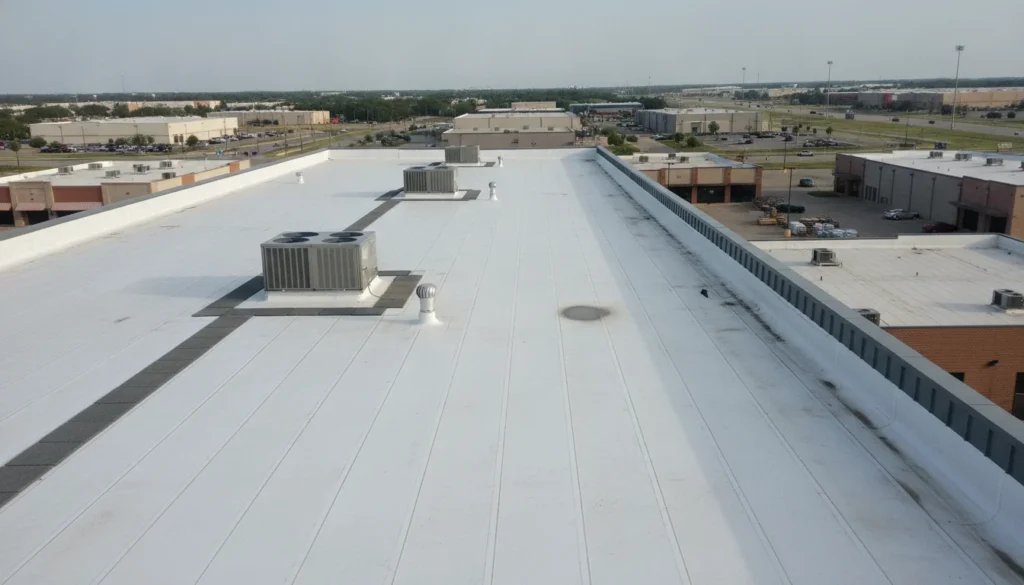
Flat and low-slope roofing is its own discipline in Sunnyvale: membrane selection, seam engineering, and drainage decide whether a commercial roof reaches its rated life.
Commercial buildings in Sunnyvale run the full membrane spectrum, from TPO’s reflective single-ply economics and EPDM’s proven rubber to PVC where grease and chemicals live, modified bitumen and built-up systems on buildings that have trusted them for decades, coatings that restore sound roofs, and structural metal. System choice follows the building: use, traffic, equipment, drainage, and budget horizon. The assessment answers it with evidence rather than preference.
We install and service flat / low-slope roofing across Sunnyvale and the surrounding DFW communities. The work comes with free written estimates, documented inspections, and honest guidance on whether this system actually fits your building and budget.
Sunnyvale Roof Systems and Large-Stone Risk
In Sunnyvale, half of the hail days since 2006 within 5 miles reached golf-ball size or larger, so impact performance deserves weight when choosing a commercial roof system. Membrane thickness, cover board strength, coating build and metal panel gauge all affect how a roof holds up when large stones fall. Because storms come less often here, maintenance can slip between them; a routine check of seams, flashing and drains, plus an inspection after any large hail report, usually keeps problems small. Each Cedar Crest inspection of a membrane, coating or metal roof ends with written findings and photographs.
THE SYSTEM
Flat / Low-Slope Roofing, up close.
Flat / low-slope membrane. Single-ply and built-up systems chosen by what the roof actually does all day.
PUBLIC RECORD
The local record behind Flat / Low-Slope Roofing in Sunnyvale
How a roof system holds up in Sunnyvale depends on the storms it has to take and the houses it sits on. Here is what the public record shows.
10
Hail days, 1 in.+ since 2006
5
Golf-ball-size hail days
3.5 in.
Largest stone on record
2006
Median year homes built
Hail near Sunnyvale
Reported hail is less frequent around Sunnyvale: NOAA lists 10 days since 2006 with hail one inch or larger within 5 miles. Fewer reports can also reflect fewer storm spotters in smaller communities, so a quiet record is not a guarantee. Hail one inch or larger was reported in 8 of the last 20 years. The largest stones on record nearby measured 3.5 inches (teacup size) on April 3, 2012. The most recent report: 1.5-inch hail on May 28, 2024.
April 3, 2012: 3.5-inch hail (teacup size)
June 2, 2017: 2.5-inch hail (tennis ball size)
June 13, 2023: 1.75-inch hail (golf ball size)
April 30, 2011: 1.75-inch hail (golf ball size)
February 5, 2008: 1.75-inch hail (golf ball size)
How old Sunnyvale homes are
The median home in Sunnyvale was built in 2006. A large share of the city's 2,792 housing units are now old enough that original roofs are coming due, while 37% were built in 2010 or later.
Sources: NOAA National Centers for Environmental Information, Storm Events Database (hail reports since 2006 within 5 miles of Sunnyvale); U.S. Census Bureau, American Community Survey 2020–2024 5-year estimates. Data pulled September 2026.
Common questions about flat / low-slope roofing in Sunnyvale
What is the best flat roof system in Sunnyvale?
The one matched to your building. TPO leads new low-slope installs on economics and reflectivity, but restaurants argue for PVC, and a sound existing roof often argues for a coating instead of anything new.
How long do commercial flat roofs last?
System- and maintenance-dependent: single-ply membranes commonly rate twenty to thirty years, and twice-yearly maintenance is what lets a roof actually collect its rating.
Can you match the premium materials common in Sunnyvale?
That's our premium catalog's home turf: tile, standing seam, stone-coated steel, and composite slate and shake, installed to manufacturer specification with the documentation the home's value deserves.
How often does hail hit Sunnyvale?
NOAA lists 10 days since 2006 with hail one inch or larger within 5 miles of Sunnyvale. Smaller communities have fewer storm spotters, so reports tend to undercount what actually falls. The most recent report was 1.5-inch hail on May 28, 2024.
How old are most homes in Sunnyvale?
The median home in Sunnyvale was built in 2006, according to the U.S. Census Bureau's American Community Survey. 7% of the city's housing units predate 1980 and 37% were built in 2010 or later. Many homes here still have their original builder-installed roof.