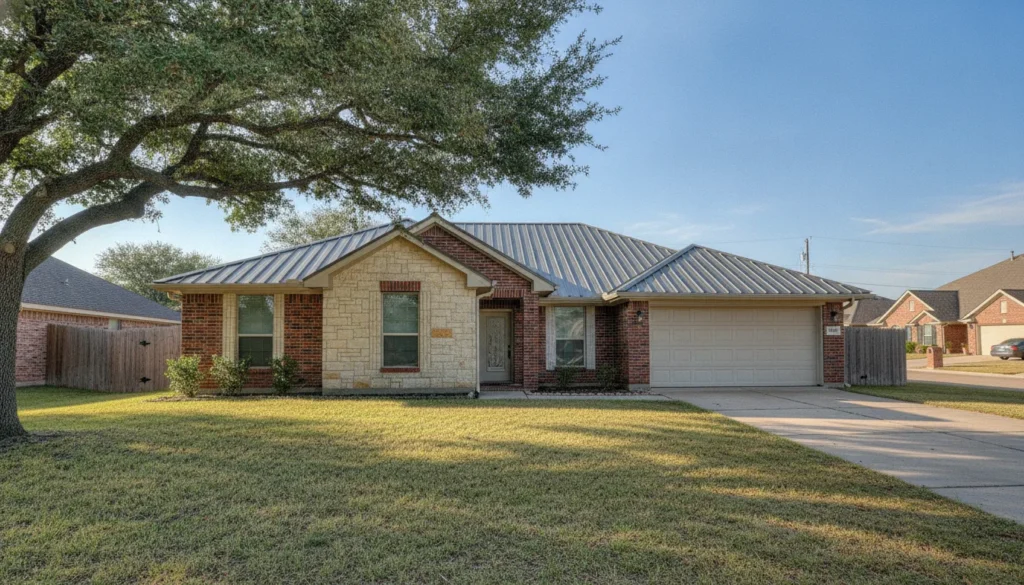
Corrugated metal is the classic wavy-panel, exposed-fastener system: economical, fast to install, and a deliberate aesthetic on the right Blue Mound home.
Corrugated panels overlap and screw down through the face, which makes them the most affordable metal entry point and also sets their maintenance rhythm: exposed fasteners and washers need periodic checks as DFW thermal cycling works on them. On barns, shops, porches, and farmhouse-style homes in Blue Mound, corrugated is often exactly the right call.
We install and service corrugated metal roofing across Blue Mound and the surrounding DFW communities: free written estimates, documented inspections, and honest guidance on whether this system actually fits your home and budget.
On the ground in Blue Mound
Every city wears this system a little differently, and Blue Mound is no exception. These are streets where roofs have been replaced before, which means layered history, patched decking, and flashing choices from three owners ago. On that stock, standing seam is usually the “never again” option: owners who are done with the replace-every-hailstorm cycle trade up and stay put.
The permit runs through Blue Mound’s building department; we handle the filing and the inspection scheduling as part of the job. North Texas sits in the country’s most active hail belt, and steel takes cosmetic dents and keeps the water out, a trade most metal owners accept happily. Because Fort Worth, Arlington, and Mansfield share our dispatch routes, examples of this exact system nearby are easy to arrange. When we quote it, ask for nearby addresses. A real roof with weather on it is the honest brochure.
THE SYSTEM
Corrugated Metal Roofing, up close.
Standing seam metal. Wide flat pans, concealed fasteners: the profile that shrugs off hail seasons.
PUBLIC RECORD
The local record behind Corrugated Metal Roofing in Blue Mound
How a roof system holds up in Blue Mound depends on the storms it has to take and the houses it sits on. Here is what the public record shows.
20
Hail days, 1 in.+ since 2006
6
Golf-ball-size hail days
3 in.
Largest stone on record
1974
Median year homes built
Hail near Blue Mound
NOAA's Storm Events Database lists 20 days since 2006 with hail one inch or larger reported within 4 miles of Blue Mound. On 6 of those days, the stones were golf ball size or bigger. Hail that size was reported in 12 of the last 20 years. The largest stones on record nearby measured 3 inches (teacup size) on April 28, 2021. The most recent report: 1.75-inch hail on April 25, 2026.
April 28, 2021: 3-inch hail (teacup size)
April 13, 2007: 2.5-inch hail (tennis ball size)
April 25, 2026: 1.75-inch hail (golf ball size)
April 28, 2020: 1.75-inch hail (golf ball size)
May 11, 2012: 1.75-inch hail (golf ball size)
How old Blue Mound homes are
Half of Blue Mound's 813 housing units were built in 1974 or earlier, and 62% predate 1980. On homes that age, today's roof is rarely the original, and older decking, layered repairs and ventilation that was never brought up to date are common.
Sources: NOAA National Centers for Environmental Information, Storm Events Database (hail reports since 2006 within 4 miles of Blue Mound); U.S. Census Bureau, American Community Survey 2020–2024 5-year estimates. Data pulled September 2026.
Common questions about corrugated metal roofing in Blue Mound
Is corrugated metal good enough for a house in Blue Mound?
It can be. Installed over solid decking with proper underlayment, it performs well. The trade-off versus standing seam is exposed fasteners, which become the roof's maintenance schedule.
How often do exposed fasteners need attention?
A fastener check every several years is smart in DFW's temperature swings. Backing screws and aging washers are cheap to address early and leak-shaped when ignored.
Should we match the original material when re-roofing in Blue Mound?
Not automatically. A roof on its second or third cycle is a chance to rethink: Class 4 asphalt for the insurance math, metal or premium systems where the home and horizon justify them. We quote the honest options against your actual house.
How often does hail hit Blue Mound?
NOAA's Storm Events Database lists 20 days since 2006 with hail one inch or larger reported within 4 miles of Blue Mound, including 6 days with golf ball size stones or bigger. Hail that size was reported in 12 of the last 20 years. The most recent report was 1.75-inch hail on April 25, 2026.
How old are most homes in Blue Mound?
The median home in Blue Mound was built in 1974, according to the U.S. Census Bureau's American Community Survey. 62% of the city's housing units predate 1980 and 12% were built in 2010 or later. Most homes here are well past the life of their original roof.