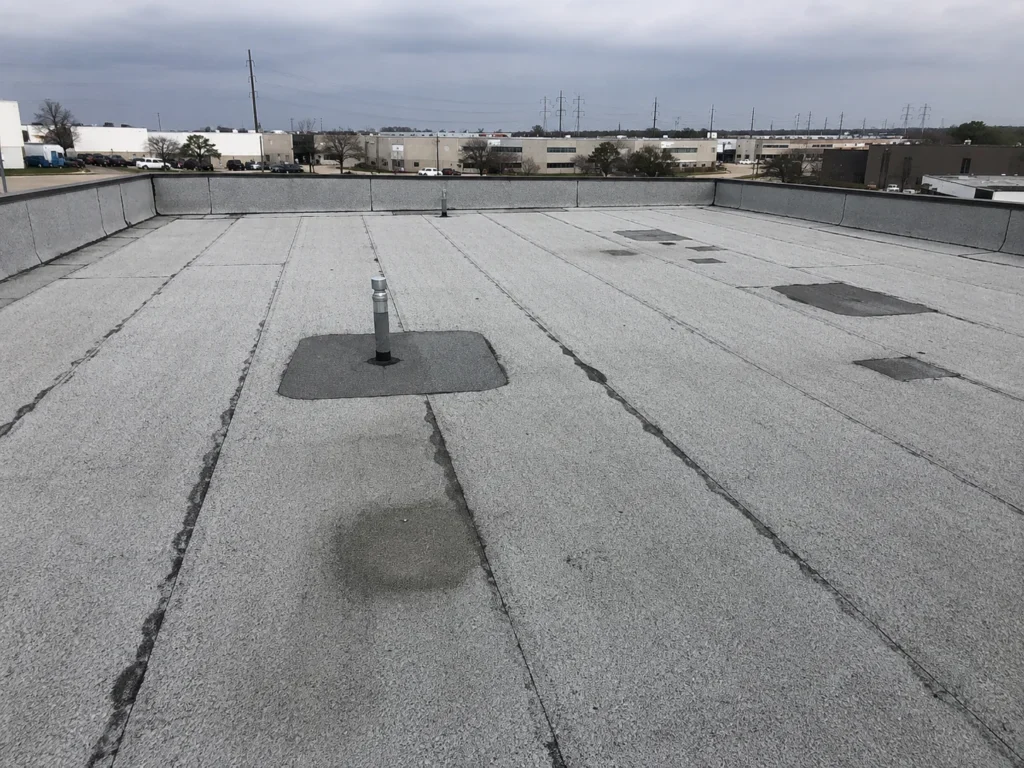
Modified bitumen (mod-bit) is asphalt roofing engineered for low slopes: multi-ply redundancy and a puncture toughness single-ply membranes cannot match.
Mod-bit’s argument on Lakeside buildings is layers: two or more plies of polymer-modified asphalt build a roof with backup. A puncture must get through redundancy, not one membrane. It handles rooftop foot traffic well, which suits buildings whose roofs double as equipment yards. Modern cold-applied and self-adhered systems have retired most of the old torch-down fire concerns.
We install and service modified bitumen roofing across Lakeside and the surrounding DFW communities: free written estimates, documented inspections, and honest guidance on whether this system actually fits your home and budget.
Modified Bitumen in Lakeside, specifically
Modified Bitumen Roofing behaves differently on Lakeside roofs than the brochure version suggests. These are streets where roofs have been replaced before. That means layered history, patched decking, and flashing choices from three owners ago. On those buildings, the membrane decision is driven by what the roof does all day (equipment traffic, ponding zones, the tenant below) more than by material fashion.
Permit-wise, this work in Lakeside runs through the city’s building department; filing it is our job, not yours. Hail is the tax every DFW roof eventually pays. Single-ply shows bruise fractures that a chalk circle will not catch, and instrument surveys find what walking the roof misses. Nearby Fort Worth and Arlington see the same crews and the same spec, so the install you would get has local addresses attached. The next step costs nothing: a documented inspection and a straight answer on whether this system fits.
THE SYSTEM
Modified Bitumen Roofing, up close.
Modified bitumen. Granule-surfaced torch-down sheets, lapped and sealed, an asphalt system laid flat.
PUBLIC RECORD
The local record behind Modified Bitumen Roofing in Lakeside
How a roof system holds up in Lakeside depends on the storms it has to take and the houses it sits on. Here is what the public record shows.
0
Hail days, 1 in.+ since 2006
0
Golf-ball-size hail days
–
Largest stone on record
1977
Median year homes built
Hail near Lakeside
NOAA's Storm Events Database lists no hail of one inch or larger within 4 miles of Lakeside since 2006. Reports depend on storm spotters, so smaller communities are under-counted, and nearby cities have recorded significant hail.
How old Lakeside homes are
The median home in Lakeside was built in 1977, and 57% of the city's 215 housing units predate 1980. Many of these houses are likely on their second roof or nearing the point where they need one.
Sources: NOAA National Centers for Environmental Information, Storm Events Database (hail reports since 2006 within 4 miles of Lakeside); U.S. Census Bureau, American Community Survey 2020–2024 5-year estimates. Data pulled September 2026.
Common questions about modified bitumen roofing in Lakeside
Is torch-down roofing safe?
Modern mod-bit rarely needs torches, since cold-applied adhesives and self-adhered sheets install without open flame. Where torch application is used, certified crews and fire-watch protocols are non-negotiable.
When does mod-bit beat single-ply in Lakeside?
Heavy rooftop traffic and equipment service. The multi-ply build tolerates the abuse that punctures single membranes. Buildings whose roofs are working platforms are mod-bit's home field.
Should we match the original material when re-roofing in Lakeside?
Not automatically. A roof on its second or third cycle is a chance to rethink: Class 4 asphalt for the insurance math, metal or premium systems where the home and horizon justify them. We quote the honest options against your actual house.
How often does hail hit Lakeside?
NOAA lists no hail reports of an inch or larger within 4 miles of Lakeside since 2006. Reports depend on storm spotters, and neighboring cities have recorded significant hail.
How old are most homes in Lakeside?
The median home in Lakeside was built in 1977, according to the U.S. Census Bureau's American Community Survey. 57% of the city's housing units predate 1980 and 6% were built in 2010 or later. Most homes here are well past the life of their original roof.