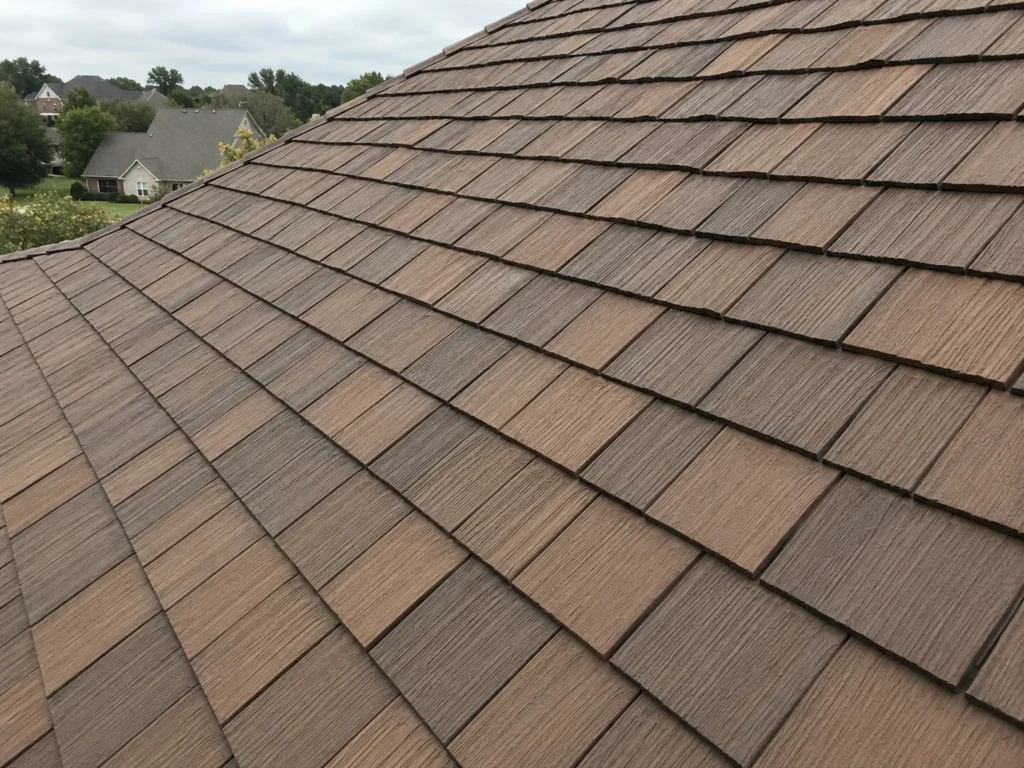
Synthetic shake delivers cedar's texture without its maintenance calendar. It is engineered polymer for Cross Roads owners who love the look but not the upkeep.
Real cedar asks for attention; polymer shake does not. Molded from actual shakes, quality synthetic lines carry Class 4 hail ratings and strong fire ratings without treatment, and never need the cleaning-and-treatment cycle wood demands in a DFW climate. The trade is character: cedar ages into individuality, polymer stays uniform.
We install and service synthetic cedar shake across Cross Roads and the surrounding DFW communities. You get free written estimates, documented inspections, and honest guidance on whether this system actually fits your home and budget.
How Cross Roads changes the math
Before the material talk, look at Cross Roads itself, because the housing stock sets the terms. This is growth-corridor stock: recent builds, builder-spec roofs, and owners discovering the difference between the shingle the builder chose and the one they would choose. That inventory is where synthetics shine. You get the architectural effect of shake or slate, with impact ratings that make sense in a hail county.
Like the rest of Denton County, Cross Roads wants roofing work documented: permits where required, inspections passed. That paperwork is included, not extra. The weather here is not hypothetical: polymer profiles rebound where wood splits and brittle materials crack. That is what the Class 4 rating is for. The install map around Cross Roads includes Denton and Lewisville, and seeing a five-year-old local roof beats any sample board. Start with the free inspection; the material conversation is better once we have seen the deck.
THE SYSTEM
Synthetic Cedar Shake, up close.
Synthetic shake. The character of hand-split cedar with none of the cupping, splitting, or treatment cycle.
PUBLIC RECORD
The local record behind Synthetic Cedar Shake in Cross Roads
How a roof system holds up in Cross Roads depends on the storms it has to take and the houses it sits on. Here is what the public record shows.
13
Hail days, 1 in.+ since 2006
3
Golf-ball-size hail days
1.75 in.
Largest stone on record
2012
Median year homes built
Hail near Cross Roads
Reported hail is less frequent around Cross Roads: NOAA lists 13 days since 2006 with hail one inch or larger within 4 miles. Fewer reports can also reflect fewer storm spotters in smaller communities, so a quiet record is not a guarantee. Hail that size was reported in 11 of the last 20 years. The largest stones on record nearby measured 1.75 inches (golf ball size) on April 3, 2014. The most recent report: 1-inch hail on September 5, 2025.
April 3, 2014: 1.75-inch hail (golf ball size)
May 30, 2012: 1.75-inch hail (golf ball size)
April 10, 2011: 1.75-inch hail (golf ball size)
March 14, 2024: 1.5-inch hail (walnut size)
March 24, 2019: 1.5-inch hail (walnut size)
How old Cross Roads homes are
Cross Roads is young by roofing standards: the median home was built in 2012, and 60% of its 768 housing units date to 2010 or later. Many of those homes still have the roof the builder installed, now working through its first hail seasons.
Sources: NOAA National Centers for Environmental Information, Storm Events Database (hail reports since 2006 within 4 miles of Cross Roads); U.S. Census Bureau, American Community Survey 2020–2024 5-year estimates. Data pulled September 2026.
Common questions about synthetic cedar shake in Cross Roads
Synthetic shake vs real cedar in Cross Roads: the honest comparison?
Cedar wins on authentic character and ages into individuality; synthetic wins on maintenance, fire rating, and hail resistance. Budget long-term care into cedar's price when comparing.
Do synthetics fade?
Quality lines are through-colored and UV-stabilized, so expect gradual mellowing over decades rather than the peeling or streaking of coated products.
Is upgrading from builder-grade shingles worth it in Cross Roads?
Usually at the first replacement or claim: Class 4 impact-rated systems earn many Texas carriers' premium discounts, and newer communities' HOA standards generally approve them easily. The math works hardest on homes facing decades of DFW hail.
How often does hail hit Cross Roads?
NOAA lists 13 days since 2006 with hail one inch or larger within 4 miles of Cross Roads. Smaller communities have fewer storm spotters, so reports tend to undercount what actually falls. The most recent report was 1-inch hail on September 5, 2025.
How old are most homes in Cross Roads?
The median home in Cross Roads was built in 2012, according to the U.S. Census Bureau's American Community Survey. 14% of the city's housing units predate 1980 and 60% were built in 2010 or later. Many homes here still have their original builder-installed roof.