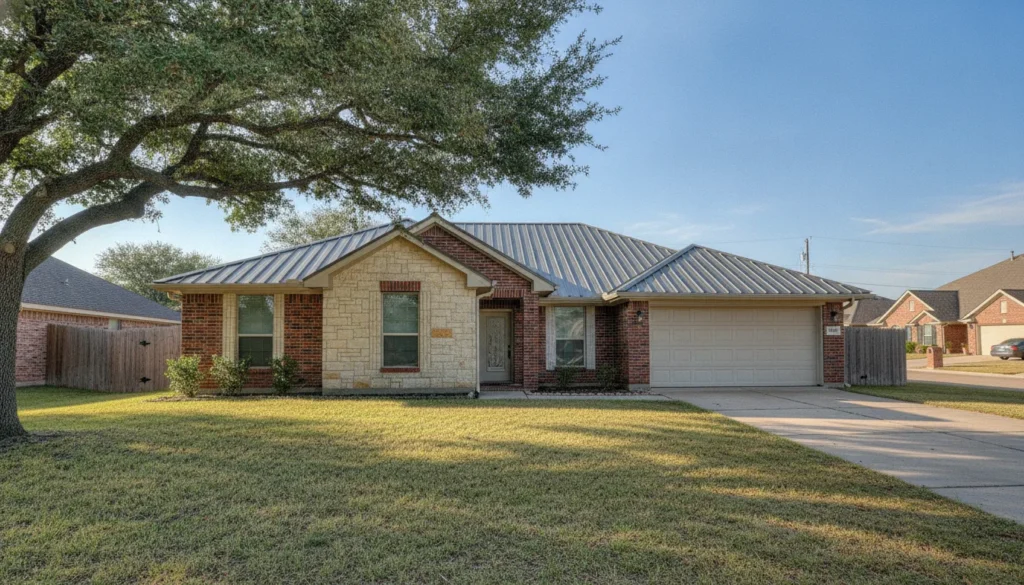
Corrugated metal is the classic wavy-panel, exposed-fastener system: economical, fast to install, and a deliberate aesthetic on the right Lowry Crossing home.
Corrugated panels overlap and screw down through the face, which makes them the most affordable metal entry point and also sets their maintenance rhythm: exposed fasteners and washers need periodic checks as DFW thermal cycling works on them. On barns, shops, porches, and farmhouse-style homes in Lowry Crossing, corrugated is often exactly the right call.
We install and service corrugated metal roofing across Lowry Crossing and the surrounding DFW communities: free written estimates, documented inspections, and honest guidance on whether this system actually fits your home and budget.
The Lowry Crossing specifics
In Lowry Crossing, the Corrugated Metal Roofing conversation usually starts with the roof that is already up there. Out here lot sizes stretch and rooflines get more individual. The inventory runs from older farm-town stock to brand-new builds on the same road. On that stock, standing seam is usually the “never again” option. Owners who are done with the replace-every-hailstorm cycle trade up and stay put.
City paperwork in Lowry Crossing is ours to carry: permit filed, inspection booked, final documentation in your folder. North Texas sits in the country’s most active hail belt, and steel takes cosmetic dents and keeps the water out. Most metal owners accept that trade happily. Because Plano, Frisco, and McKinney share our dispatch routes, examples of this exact system nearby are easy to arrange. Once we have looked at the actual roof, everything above gets specific in writing.
THE SYSTEM
Corrugated Metal Roofing, up close.
Standing seam metal. Wide flat pans, concealed fasteners: the profile that shrugs off hail seasons.
PUBLIC RECORD
The local record behind Corrugated Metal Roofing in Lowry Crossing
How a roof system holds up in Lowry Crossing depends on the storms it has to take and the houses it sits on. Here is what the public record shows.
10
Hail days, 1 in.+ since 2006
2
Golf-ball-size hail days
2.75 in.
Largest stone on record
1994
Median year homes built
Hail near Lowry Crossing
Reported hail is less frequent around Lowry Crossing: NOAA lists 10 days since 2006 with hail one inch or larger within 4 miles. Fewer reports can also reflect fewer storm spotters in smaller communities, so a quiet record is not a guarantee. Hail that size was reported in 9 of the last 20 years. The largest stones on record nearby measured 2.75 inches (baseball size) on May 28, 2024. The most recent report: 1.25-inch hail on March 25, 2025.
May 28, 2024: 2.75-inch hail (baseball size)
June 15, 2023: 1.75-inch hail (golf ball size)
March 14, 2022: 1.5-inch hail (walnut size)
June 6, 2018: 1.5-inch hail (walnut size)
March 17, 2016: 1.5-inch hail (walnut size)
How old Lowry Crossing homes are
The median home in Lowry Crossing was built in 1994, and 13% of the city's 498 housing units predate 1980. Many of these houses are likely on their second roof or nearing the point where they need one.
Sources: NOAA National Centers for Environmental Information, Storm Events Database (hail reports since 2006 within 4 miles of Lowry Crossing); U.S. Census Bureau, American Community Survey 2020–2024 5-year estimates. Data pulled September 2026.
Common questions about corrugated metal roofing in Lowry Crossing
Is corrugated metal good enough for a house in Lowry Crossing?
It can be. Installed over solid decking with proper underlayment, it performs well. The trade-off versus standing seam is exposed fasteners, which become the roof's maintenance schedule.
How often do exposed fasteners need attention?
A fastener check every several years is smart in DFW's temperature swings. Backing screws and aging washers are cheap to address early and leak-shaped when ignored.
Do you install this on shops and outbuildings near Lowry Crossing?
Yes. Barns, workshops, and outbuildings are first-class projects out here, not afterthoughts, and the material conversation (usually metal-forward) covers them alongside the house.
How often does hail hit Lowry Crossing?
NOAA lists 10 days since 2006 with hail one inch or larger within 4 miles of Lowry Crossing. Smaller communities have fewer storm spotters, so reports tend to undercount what actually falls. The most recent report was 1.25-inch hail on March 25, 2025.
How old are most homes in Lowry Crossing?
The median home in Lowry Crossing was built in 1994, according to the U.S. Census Bureau's American Community Survey. 13% of the city's housing units predate 1980 and 4% were built in 2010 or later. Many homes here are reaching the age when original roofs come due.