After hail or high wind hits Glenn Heights, the right order of operations protects both your roof and your insurance claim: document first, stop active leaks with proper tarping, get a written professional inspection, and only then make claim decisions.
STORM TRIAGE
What do you need help with right now?
Pick the door that matches your situation. It routes you to the right person on the team, and every path starts with a free, documented look at the roof.
Texas law requires homeowners to pay their insurance deductible.
Cedar Crest does not waive or absorb deductibles. If anyone offers to, walk away.
It puts your claim at risk and may be illegal. We document damage, provide estimates,
and meet your adjuster on-site to answer construction questions. We are not a public
adjuster and do not interpret your policy or negotiate claim value.
We document storm damage in Glenn Heights with photos and measurements, provide written estimates, and meet your adjuster on-site to answer construction questions. We are not a public adjuster: we do not interpret your policy or negotiate claim value. Texas law draws that line and we respect it. And we never offer to waive deductibles; that practice is illegal in Texas.
Roofing in Glenn Heights, specifically
Much of Glenn Heights’s housing stock is new enough that its original builder-grade roofs are only now meeting their first serious hail cycles, and first storms on builder-spec shingles are where a lot of Ellis County owners discover what was actually installed over their heads. The local conversations that follow are predictable and worth having early: what the builder’s workmanship coverage does and doesn’t survive, whether the first insurance claim is the moment to upgrade to Class 4 impact-rated shingles (usually yes; the premium discount math works hardest here), and how HOA architectural standards shape material choices in newer communities.
The same crews cover Waxahachie, Ennis and Midlothian, which keeps Glenn Heights scheduling flexible when storm weeks compress everyone’s calendar.
FROM OUR CREWS
The crews you'd actually get.
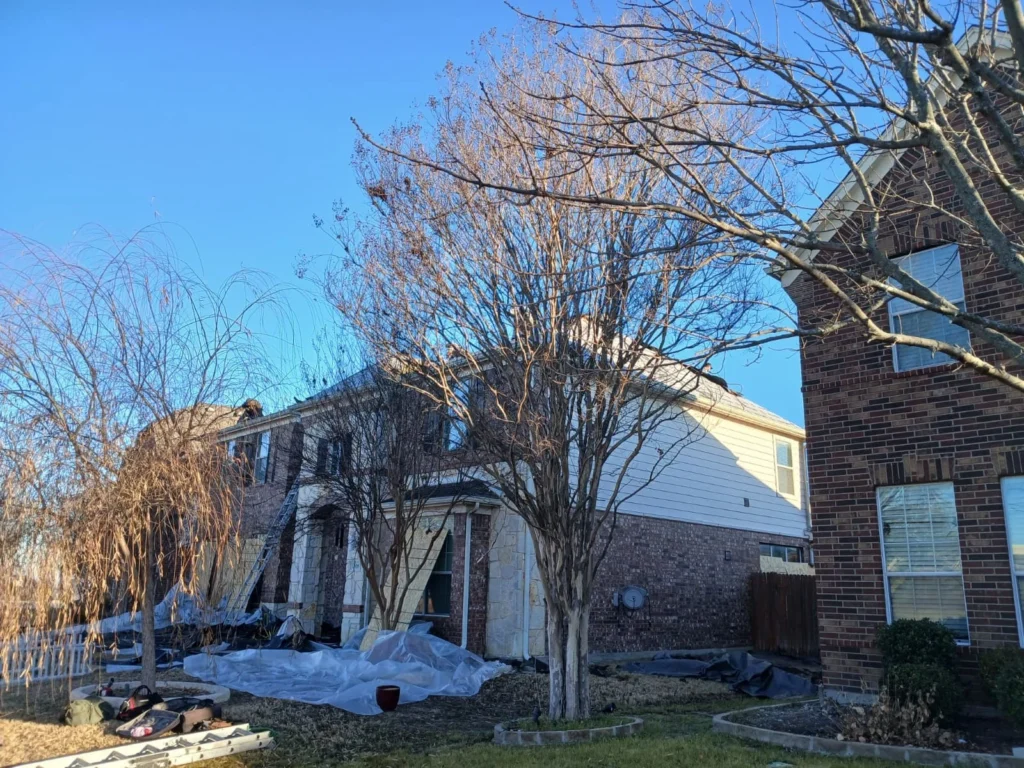
Real Cedar Crest crews on DFW roofs. Every project photo below is from our own jobs.
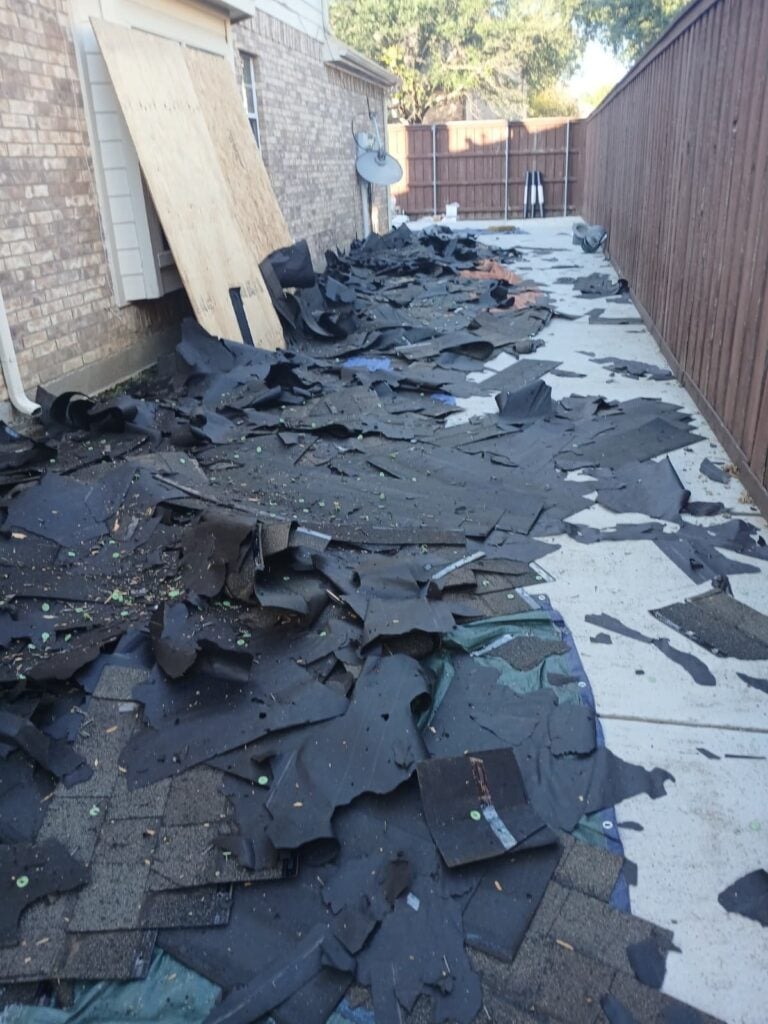
The honest before
Aging shingles that earned a replacement.
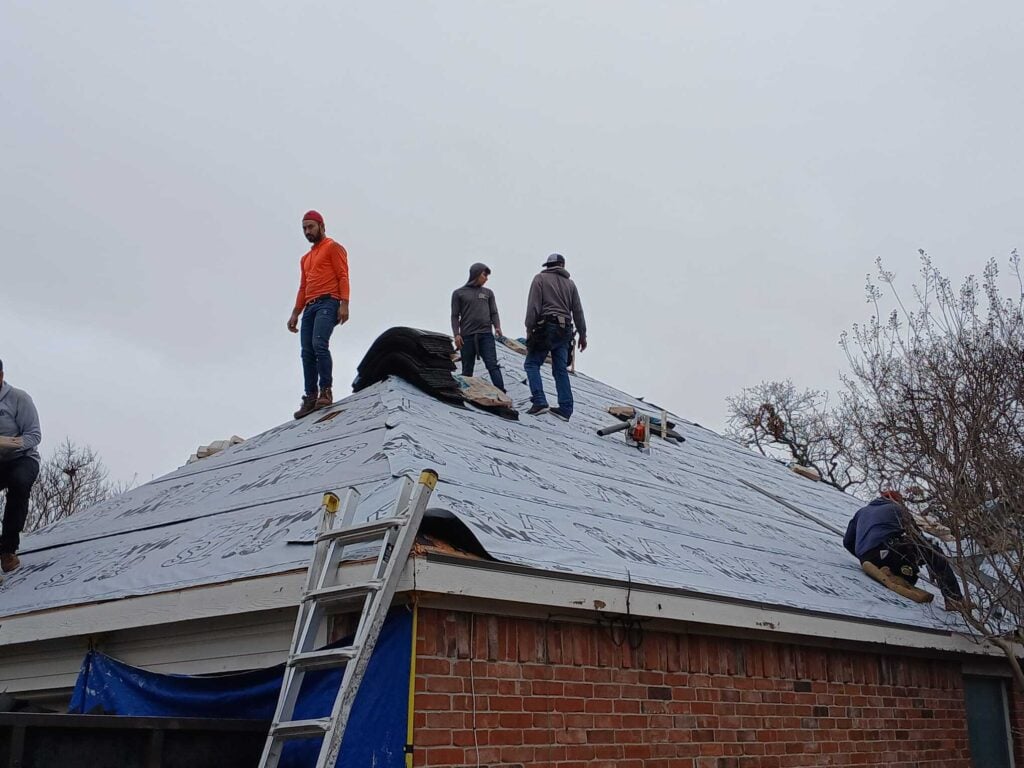
Underlayment going down
Synthetic underlayment sealed across the deck before the first course.
Section by section
The crew working a plane at a time: staged, sequenced, tidy.
PUBLIC RECORD
The hail and housing record in Glenn Heights
Before you plan storm & hail damage in Glenn Heights, it helps to know what the public record says about local hail and the age of the homes.
19
Hail days, 1 in.+ since 2006
1
Golf-ball-size hail days
2.25 in.
Largest stone on record
2004
Median year homes built
Hail near Glenn Heights
NOAA's Storm Events Database lists 19 days since 2006 with hail one inch or larger reported within 5 miles of Glenn Heights. On 1 of those days, the stones were golf ball size or bigger. Hail that size was reported in 12 of the last 20 years. The largest stones on record nearby measured 2.25 inches (hen egg size) on September 24, 2023. The most recent report: 1.25-inch hail on June 6, 2026.
September 24, 2023: 2.25-inch hail (hen egg size)
June 13, 2023: 1.5-inch hail (walnut size)
April 9, 2021: 1.5-inch hail (walnut size)
June 6, 2026: 1.25-inch hail (half dollar size)
March 1, 2023: 1.25-inch hail (half dollar size)
How old Glenn Heights homes are
The median home in Glenn Heights was built in 2004. A large share of the city's 6,073 housing units are now old enough that original roofs are coming due, while 34% were built in 2010 or later.
Sources: NOAA National Centers for Environmental Information, Storm Events Database (hail reports since 2006 within 5 miles of Glenn Heights); U.S. Census Bureau, American Community Survey 2020–2024 5-year estimates. Data pulled September 2026.
We don't waive deductibles; nobody legally can. Texas law requires
homeowners to pay their insurance deductible (Tex. Ins. Code ch. 707). If a roofer offers
to "cover" or "absorb" yours, walk away. It puts your claim at risk and may be a felony
for the contractor.
We document damage, provide repair and replacement estimates, and meet your
adjuster on-site to answer construction questions. We are not a public adjuster
and do not interpret your insurance policy or negotiate claim value on your behalf.
Common questions about storm & hail damage in Glenn Heights
How do I know if my roof in Glenn Heights has hail damage?
Ground-level clues include dented gutters and vents, but the damage that matters (shingle bruising and granule displacement) needs an on-roof inspection. Ours are free and documented with photos.
Should I file an insurance claim after every storm in Glenn Heights?
No. File when documented damage justifies it. An inspection first protects you both ways: real damage gets properly documented, and a healthy roof avoids an unnecessary claim on your record.
A door-knocker offered to cover my deductible. Is that legit?
No. Texas law requires homeowners to pay their deductible, and contractors offering to waive or absorb it are breaking the law and putting your claim at risk. Walk away.
Will this work void our builder's warranty in Glenn Heights?
Properly documented work doesn't, and our written findings and scopes are built to keep your builder-warranty file intact. What actually endangers coverage is undocumented storm patching, which we don't do.
How often does hail hit Glenn Heights?
NOAA's Storm Events Database lists 19 days since 2006 with hail one inch or larger reported within 5 miles of Glenn Heights, including 1 days with golf ball size stones or bigger. Hail that size was reported in 12 of the last 20 years. The most recent report was 1.25-inch hail on June 6, 2026.
How old are most homes in Glenn Heights?
The median home in Glenn Heights was built in 2004, according to the U.S. Census Bureau's American Community Survey. 11% of the city's housing units predate 1980 and 34% were built in 2010 or later. Many homes here are reaching the age when original roofs come due.