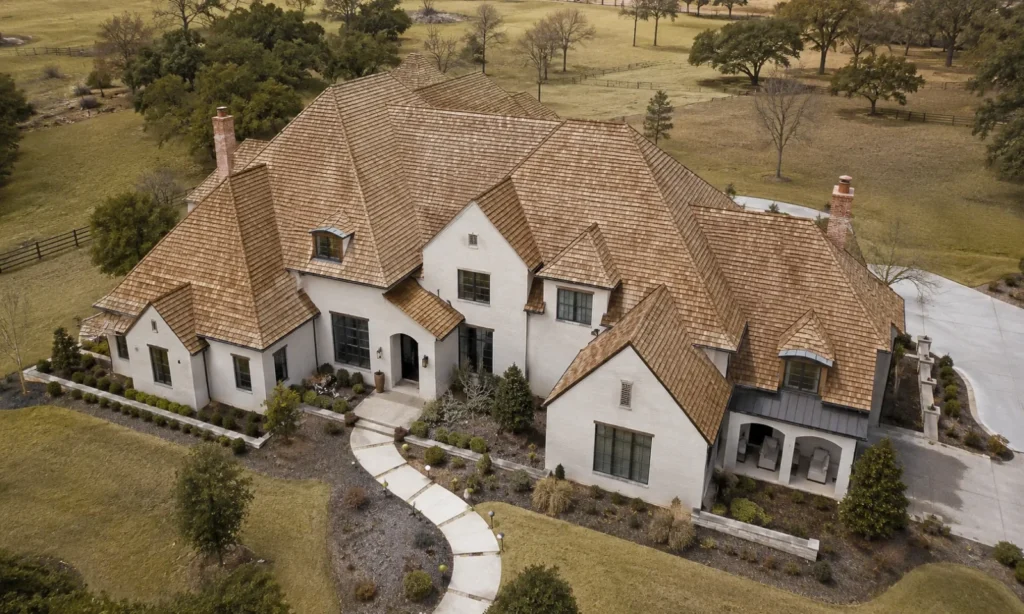
Western red cedar is the default cedar, the species most Princeton shake and shingle roofs are made of, prized for its grain, workability, and natural weather resistance.
When someone says cedar roof in Princeton, they usually mean western red: hand-split shakes for texture or sawn shingles for a tailored line. Grade matters enormously (premium heartwood grades earn their price in service life), and so does the air beneath: cedar breathes, and roofs that trap moisture under it age in fast-forward.
We install and service western red cedar shake across Princeton and the surrounding DFW communities. The work comes with free written estimates, documented inspections, and honest guidance on whether this system actually fits your home and budget.
The local case in Princeton
In Princeton, the Western Red Cedar Shake conversation usually starts with the roof that is already up there. Most of the housing went up in the last two decades, which means first-generation roofs aging out on the same schedule, block after block. That stock wears cedar handsomely when it is maintained and expensively when it is not; the difference is a treatment cycle most owners have never been told about.
The permit runs through Princeton’s building department; we handle the filing and the inspection scheduling as part of the job. North Texas sits in the country’s most active hail belt, and shakes split on impact, a fact every carrier knows. Documentation before and after storms is a cedar owner’s best friend. Crews rotate through Plano, Frisco, and McKinney on the same routes, which keeps Princeton scheduling flexible. All of the above gets specific, in writing, once we have looked at the actual roof.
THE SYSTEM
Western Red Cedar Shake, up close.
Cedar shake. Hand-split shakes across a complex roofline, with character that earns its maintenance.
PUBLIC RECORD
The local record behind Western Red Cedar Shake in Princeton
How a roof system holds up in Princeton depends on the storms it has to take and the houses it sits on. Here is what the public record shows.
11
Hail days, 1 in.+ since 2006
3
Golf-ball-size hail days
2.75 in.
Largest stone on record
2014
Median year homes built
Hail near Princeton
Reported hail is less frequent around Princeton: NOAA lists 11 days since 2006 with hail one inch or larger within 5 miles. Fewer reports can also reflect fewer storm spotters in smaller communities, so a quiet record is not a guarantee. Hail that size was reported in 9 of the last 20 years. The largest stones on record nearby measured 2.75 inches (baseball size) on May 28, 2024. The most recent report: 1.25-inch hail on March 25, 2025.
May 28, 2024: 2.75-inch hail (baseball size)
November 4, 2024: 1.75-inch hail (golf ball size)
June 15, 2023: 1.75-inch hail (golf ball size)
March 14, 2022: 1.5-inch hail (walnut size)
June 6, 2018: 1.5-inch hail (walnut size)
How old Princeton homes are
Princeton is young by roofing standards: the median home was built in 2014, and 66% of its 8,130 housing units date to 2010 or later. Many of those homes still have the roof the builder installed, now working through its first hail seasons.
Sources: NOAA National Centers for Environmental Information, Storm Events Database (hail reports since 2006 within 5 miles of Princeton); U.S. Census Bureau, American Community Survey 2020–2024 5-year estimates. Data pulled September 2026.
Common questions about western red cedar shake in Princeton
Shake or shingle: what is the difference?
Shakes are split, thicker, and textured; shingles are sawn, thinner, and tailored. Same species, different character: shakes read rustic, shingles read refined.
What cedar grade should I buy in Princeton?
Premium heartwood grades. The price difference buys decay resistance and service life. Economy cedar grades in a DFW climate are a false saving.
Is upgrading from builder-grade shingles worth it in Princeton?
Usually at the first replacement or claim: Class 4 impact-rated systems earn many Texas carriers' premium discounts, and newer communities' HOA standards generally approve them easily. The math works hardest on homes facing decades of DFW hail.
How often does hail hit Princeton?
NOAA lists 11 days since 2006 with hail one inch or larger within 5 miles of Princeton. Smaller communities have fewer storm spotters, so reports tend to undercount what actually falls. The most recent report was 1.25-inch hail on March 25, 2025.
How old are most homes in Princeton?
The median home in Princeton was built in 2014, according to the U.S. Census Bureau's American Community Survey. 10% of the city's housing units predate 1980 and 66% were built in 2010 or later. Many homes here still have their original builder-installed roof.