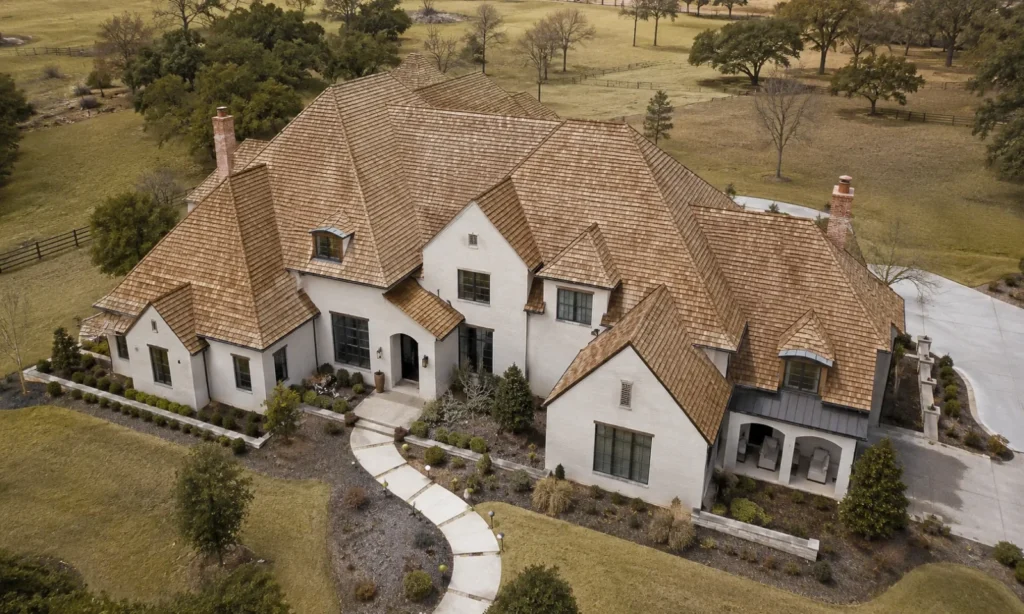
Western red cedar is the default cedar, the species most Sunnyvale shake and shingle roofs are made of, prized for its grain, workability, and natural weather resistance.
When someone says cedar roof in Sunnyvale, they usually mean western red: hand-split shakes for texture or sawn shingles for a tailored line. Grade matters enormously (premium heartwood grades earn their price in service life), and so does the air beneath: cedar breathes, and roofs that trap moisture under it age in fast-forward.
We install and service western red cedar shake across Sunnyvale and the surrounding DFW communities. The work comes with free written estimates, documented inspections, and honest guidance on whether this system actually fits your home and budget.
How Sunnyvale changes the math
The honest starting point for Western Red Cedar Shake in Sunnyvale is the street you live on, not the sample board. These are streets where roofs have been replaced before. That means layered history, patched decking, and flashing choices from three owners ago. For those roofs, real wood is a character decision, and our job is keeping it honest about what North Texas sun and hail do to untreated shakes.
City paperwork in Sunnyvale is ours to carry: permit filed, inspection booked, final documentation in your folder. The weather here is not hypothetical: shakes split on impact and every carrier knows it. Documentation before and after storms is a cedar owner’s best friend. Nearby Dallas and Irving see the same crews and the same spec, so the install you would get has local addresses attached. One inspection turns the general case into your case, with photos and numbers attached.
THE SYSTEM
Western Red Cedar Shake, up close.
Cedar shake. Hand-split shakes across a complex roofline, with character that earns its maintenance.
PUBLIC RECORD
The local record behind Western Red Cedar Shake in Sunnyvale
How a roof system holds up in Sunnyvale depends on the storms it has to take and the houses it sits on. Here is what the public record shows.
10
Hail days, 1 in.+ since 2006
5
Golf-ball-size hail days
3.5 in.
Largest stone on record
2006
Median year homes built
Hail near Sunnyvale
Reported hail is less frequent around Sunnyvale: NOAA lists 10 days since 2006 with hail one inch or larger within 5 miles. Fewer reports can also reflect fewer storm spotters in smaller communities, so a quiet record is not a guarantee. Hail that size was reported in 8 of the last 20 years. The largest stones on record nearby measured 3.5 inches (teacup size) on April 3, 2012. The most recent report: 1.5-inch hail on May 28, 2024.
April 3, 2012: 3.5-inch hail (teacup size)
June 2, 2017: 2.5-inch hail (tennis ball size)
June 13, 2023: 1.75-inch hail (golf ball size)
April 30, 2011: 1.75-inch hail (golf ball size)
February 5, 2008: 1.75-inch hail (golf ball size)
How old Sunnyvale homes are
The median home in Sunnyvale was built in 2006. A large share of the city's 2,792 housing units are now old enough that original roofs are coming due, while 37% were built in 2010 or later.
Sources: NOAA National Centers for Environmental Information, Storm Events Database (hail reports since 2006 within 5 miles of Sunnyvale); U.S. Census Bureau, American Community Survey 2020–2024 5-year estimates. Data pulled September 2026.
Common questions about western red cedar shake in Sunnyvale
Shake or shingle: what is the difference?
Shakes are split, thicker, and textured; shingles are sawn, thinner, and tailored. Same species, different character: shakes read rustic, shingles read refined.
What cedar grade should I buy in Sunnyvale?
Premium heartwood grades. The price difference buys decay resistance and service life. Economy cedar grades in a DFW climate are a false saving.
Can you match the premium materials common in Sunnyvale?
That's our premium catalog's home turf: tile, standing seam, stone-coated steel, and composite slate and shake, installed to manufacturer specification with the documentation the home's value deserves.
How often does hail hit Sunnyvale?
NOAA lists 10 days since 2006 with hail one inch or larger within 5 miles of Sunnyvale. Smaller communities have fewer storm spotters, so reports tend to undercount what actually falls. The most recent report was 1.5-inch hail on May 28, 2024.
How old are most homes in Sunnyvale?
The median home in Sunnyvale was built in 2006, according to the U.S. Census Bureau's American Community Survey. 7% of the city's housing units predate 1980 and 37% were built in 2010 or later. Many homes here still have their original builder-installed roof.