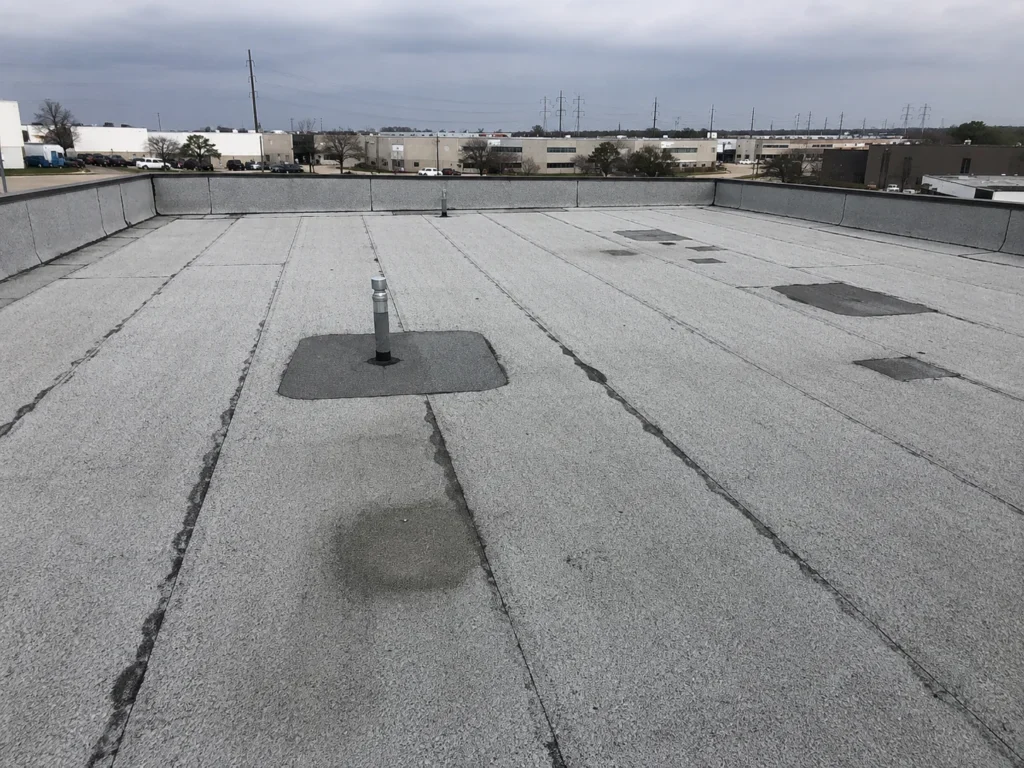
Modified bitumen earns its place on Irving buildings through layers: two or more plies of polymer-modified asphalt make a roof with a backup, so a puncture has to beat redundancy, not a single membrane. It stands up to rooftop foot traffic, which suits buildings whose roofs double as equipment yards, and modern cold-applied and self-adhered systems have retired most of the old torch-down fire concerns. Every project starts with a free written estimate and a photo-documented inspection. Texas law bars waiving a deductible, so we never do, and we are not a public adjuster.
Mod-bit redundancy against Irving hail
Layered roofs make sense where hail is routine, and Irving’s record says it is. Hail an inch or larger fell within 8 miles of the city in 15 of the last 20 years, on 33 separate days since 2006. Golf-ball-size hail or larger arrived on 9 of those days, and May 24, 2011 produced a 4.25-inch stone. A multi-ply roof lets the top layer take a hit while the plies below keep water out, and a post-storm inspection shows which layer took the damage. Irving’s housing skews established, with a median year built of 1986, and on older Dallas County buildings carrying rooftop equipment, mod-bit’s tolerance for foot traffic counts. The same crews install modified bitumen in Grapevine and Euless.