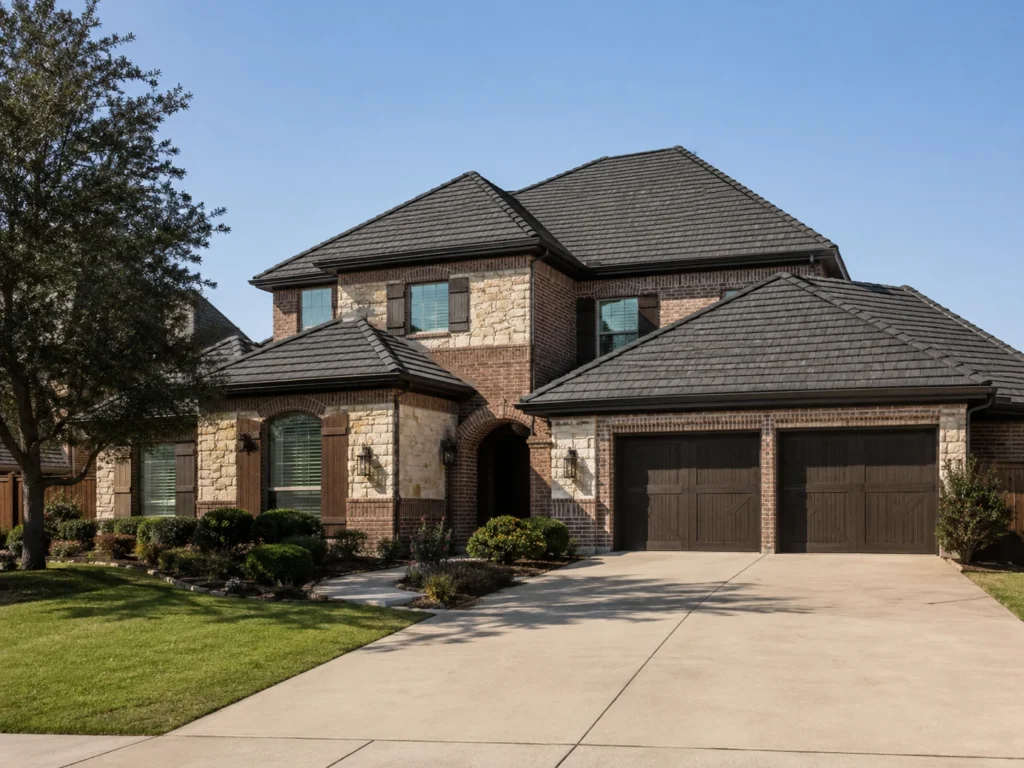
Synthetic roofing exists because slate’s weight and cedar’s upkeep stop many Fort Worth homeowners who love those looks. Engineered polymer tiles address both: a fraction of slate’s weight, none of cedar’s maintenance schedule, and Class 4 impact ratings across most product lines. The honest trade is authenticity up close and a shorter track record than the centuries-old materials they imitate. Estimates are free and written, inspections are documented with photos, deductibles are never waived under Texas law, and we are not a public adjuster.
Polymer shake and slate looks for Fort Worth homes
Hail is the main reason composites get a hearing in Fort Worth. Golf-ball-size or larger hail has struck within 14 miles of the city on 36 days since 2006, and the largest stone reached 4.25 inches on May 24, 2011. Polymer profiles flex and rebound where wood splits and brittle materials crack, which is what the Class 4 rating measures. Housing age shapes the install. The median home here dates to 1994, and 23 percent of Fort Worth housing units were built in 2010 or later, so we see both newer homes ready for a premium look and older Tarrant County houses where decking gets checked before synthetic tiles go on. Our crews also work in Westworth Village and River Oaks.