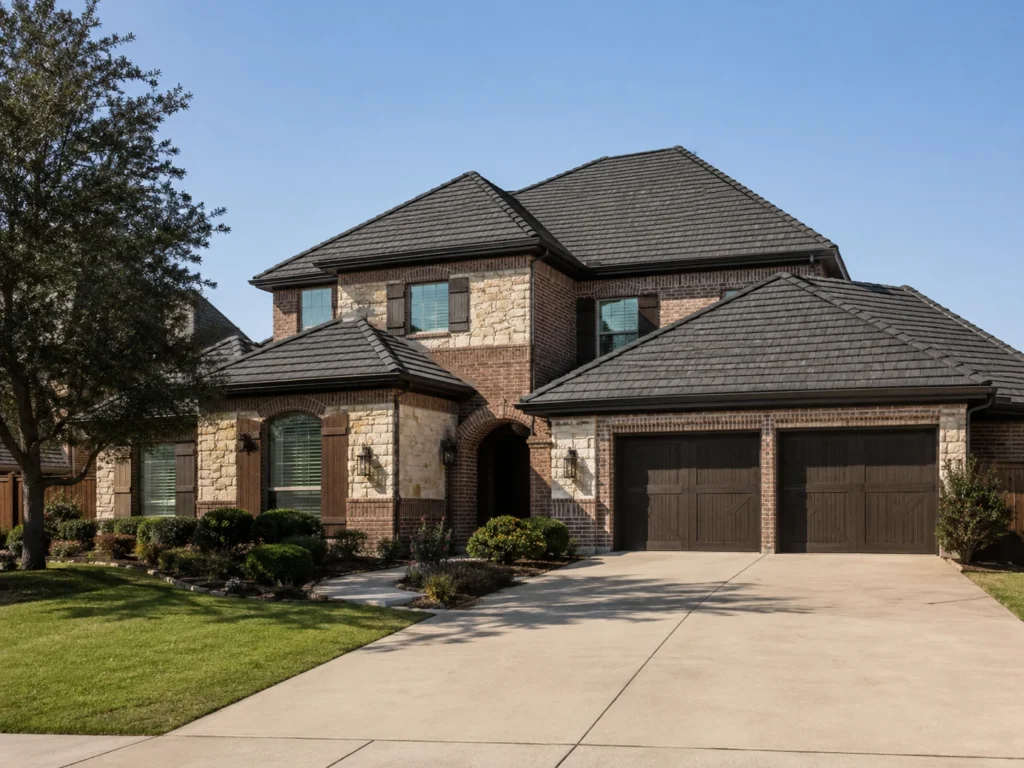
Most McKinney homes were never framed to carry natural slate, which is magnificent and brutally heavy. Polymer slate gets around that problem. It is cast from real slate molds, goes on with standard installation techniques, and is rated Class 4 for hail, so a slate-look roof becomes possible on a house that could never hold the stone. Our estimates for synthetic slate are free and written, and the inspection behind them is photographed so the findings are on record. Texas law bars waiving an insurance deductible, and we follow it every time. We also do not act as a public adjuster; our role is the roof itself.
Synthetic Slate and McKinney’s Hail Record
The largest stone on record near McKinney measured 4.5 inches on March 24, 2019, and there have been 18 days of golf-ball-size or larger hail within 8 miles since 2006. Natural slate and other brittle materials crack under that kind of impact, while polymer slate is built to absorb it. The housing stock supports the choice too. With a median build year of 2007 and 52 percent of homes built between 1980 and 2009, the typical McKinney house was designed around conventional roofing weight, which suits a lighter slate alternative far better than stone. The same crews that work McKinney handle synthetic slate across Collin County, in Allen and Lowry Crossing as well.