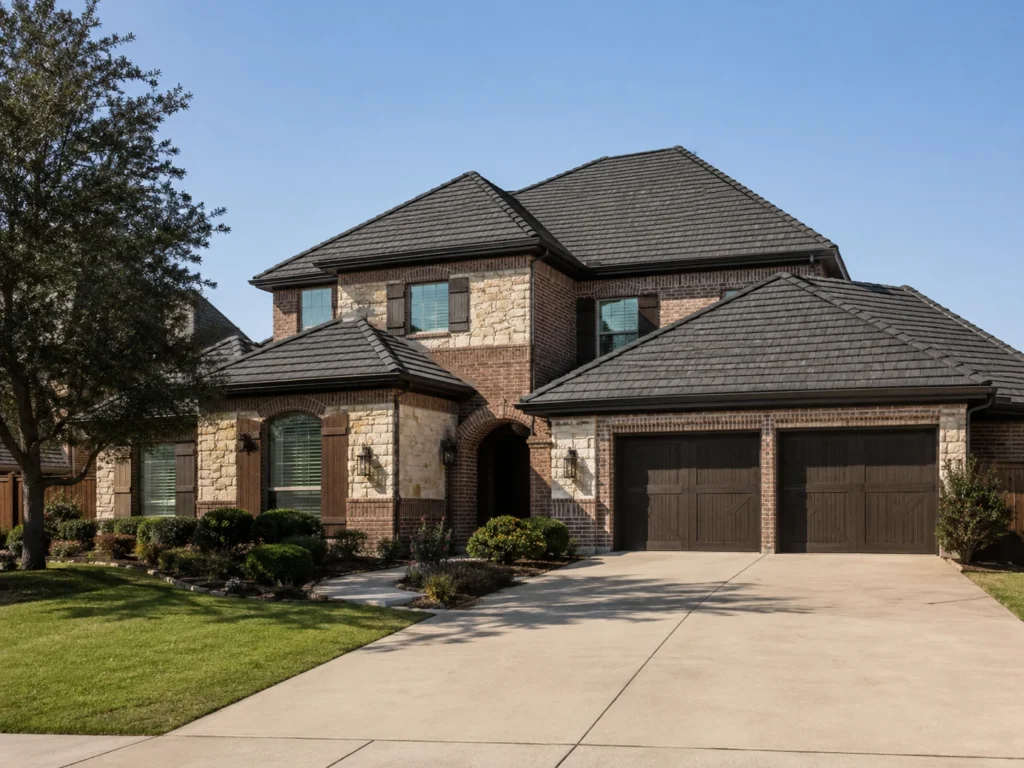
Synthetic slate gives Seagoville homes the estate look of natural slate at a fraction of its weight: no structural reinforcement, no specialty slater required.
Natural slate is magnificent and brutally heavy; most Seagoville homes were never framed for it. Polymer slate solves that: cast from real slate molds, installed with standard techniques, rated Class 4 for hail. It is how slate-look happens on homes that could never carry the stone.
We install and service synthetic slate roofing across Seagoville and the surrounding DFW communities: free written estimates, documented inspections, and honest guidance on whether this system actually fits your home and budget.
Synthetic Slate in Seagoville, specifically
Before the material talk, look at Seagoville itself. The housing stock sets the terms. The neighborhoods skew established: multiple roof generations behind them, big tree canopies overhead, and original decking that deserves inspection before anything new goes on. That inventory is where synthetics shine, pairing the architectural effect of shake or slate with impact ratings that make sense in a hail county.
Like the rest of Dallas County, Seagoville wants roofing work documented, with permits where required and inspections passed. That paperwork is included, not extra. The weather here is not hypothetical: polymer profiles rebound where wood splits and brittle materials crack, which is what the Class 4 rating is for. We work this system in Dallas and Irving as well; ask and we will point you at nearby examples with a few years of weather on them. Start with the free inspection; the material conversation is better once we have seen the deck.
THE SYSTEM
Synthetic Slate Roofing, up close.
Synthetic slate. Thick-butt polymer tiles, Class 4 rated, without the structural weight of quarried stone.
PUBLIC RECORD
The local record behind Synthetic Slate Roofing in Seagoville
How a roof system holds up in Seagoville depends on the storms it has to take and the houses it sits on. Here is what the public record shows.
7
Hail days, 1 in.+ since 2006
1
Golf-ball-size hail days
1.75 in.
Largest stone on record
1992
Median year homes built
Hail near Seagoville
Reported hail is less frequent around Seagoville: NOAA lists 7 days since 2006 with hail one inch or larger within 5 miles. Fewer reports can also reflect fewer storm spotters in smaller communities, so a quiet record is not a guarantee. Hail that size was reported in 4 of the last 20 years. The largest stones on record nearby measured 1.75 inches (golf ball size) on May 17, 2010. The most recent report: 1.5-inch hail on June 2, 2026.
May 17, 2010: 1.75-inch hail (golf ball size)
June 2, 2026: 1.5-inch hail (walnut size)
April 3, 2012: 1.5-inch hail (walnut size)
May 10, 2021: 1-inch hail (quarter size)
March 24, 2021: 1-inch hail (quarter size)
How old Seagoville homes are
The median home in Seagoville was built in 1992, and 36% of the city's 5,692 housing units predate 1980. Many of these houses are likely on their second roof or nearing the point where they need one.
Sources: NOAA National Centers for Environmental Information, Storm Events Database (hail reports since 2006 within 5 miles of Seagoville); U.S. Census Bureau, American Community Survey 2020–2024 5-year estimates. Data pulled September 2026.
Common questions about synthetic slate roofing in Seagoville
Can my Seagoville home support synthetic slate?
Almost certainly. Polymer slate weighs comparable to architectural shingles, a fraction of natural stone. No structural reinforcement is the category's founding advantage.
How does synthetic slate age?
Quality lines hold color and shape for decades and carry long warranties; the category's track record is measured in decades rather than slate's centuries, the honest asterisk on an otherwise strong case.
Should we match the original material when re-roofing in Seagoville?
Not automatically. A roof on its second or third cycle is a chance to rethink: Class 4 asphalt for the insurance math, metal or premium systems where the home and horizon justify them. We quote the honest options against your actual house.
How often does hail hit Seagoville?
NOAA lists 7 days since 2006 with hail one inch or larger within 5 miles of Seagoville. Smaller communities have fewer storm spotters, so reports tend to undercount what actually falls. The most recent report was 1.5-inch hail on June 2, 2026.
How old are most homes in Seagoville?
The median home in Seagoville was built in 1992, according to the U.S. Census Bureau's American Community Survey. 36% of the city's housing units predate 1980 and 18% were built in 2010 or later. Many homes here are reaching the age when original roofs come due.