Emergency roof repair in Grand Prairie runs in two stages: immediate protection, meaning proper tarping and water management done safely, then the permanent repair, scoped in daylight with the full picture.
STORM TRIAGE
What do you need help with right now?
Pick the door that matches your situation. It routes you to the right person on the team, and every path starts with a free, documented look at the roof.
Texas law requires homeowners to pay their insurance deductible.
Cedar Crest does not waive or absorb deductibles. If anyone offers to, walk away.
It puts your claim at risk and may be illegal. We document damage, provide estimates,
and meet your adjuster on-site to answer construction questions. We are not a public
adjuster and do not interpret your policy or negotiate claim value.
Active water intrusion, tree impact, or a roof opened by a storm puts a Grand Prairie home at the front of our dispatch list. Managing water inside the house is safe for homeowners. Roof-side work in bad conditions is what emergency crews are for, so please stay off a wet or damaged roof. After the house is protected, we inspect and photograph the damage and write a free estimate for the lasting repair. We never waive deductibles, which Texas law prohibits, and we are not public adjusters.
Getting a Grand Prairie Home Dried In After a Storm
Emergency calls in Grand Prairie cluster around hail and wind. Hail an inch or larger has hit within 8 miles of the city in 16 of the last 20 years, and the June 12, 2023 storm produced stones up to 4.0 inches. Age plays a part in how a roof handles that kind of hit. The median Grand Prairie home was built in 1992, and 31 percent predate 1980, so many roofs meeting these storms carry years of sun wear and earlier repairs. Temporary protection comes first, then the permanent fix once conditions allow. Our emergency crews work across Dallas County, including Duncanville and Dalworthington Gardens, so a storm that covers several cities still gets a response.
FROM OUR CREWS
The crews you'd actually get.
Real Cedar Crest crews on DFW roofs. Every project photo below is from our own jobs.
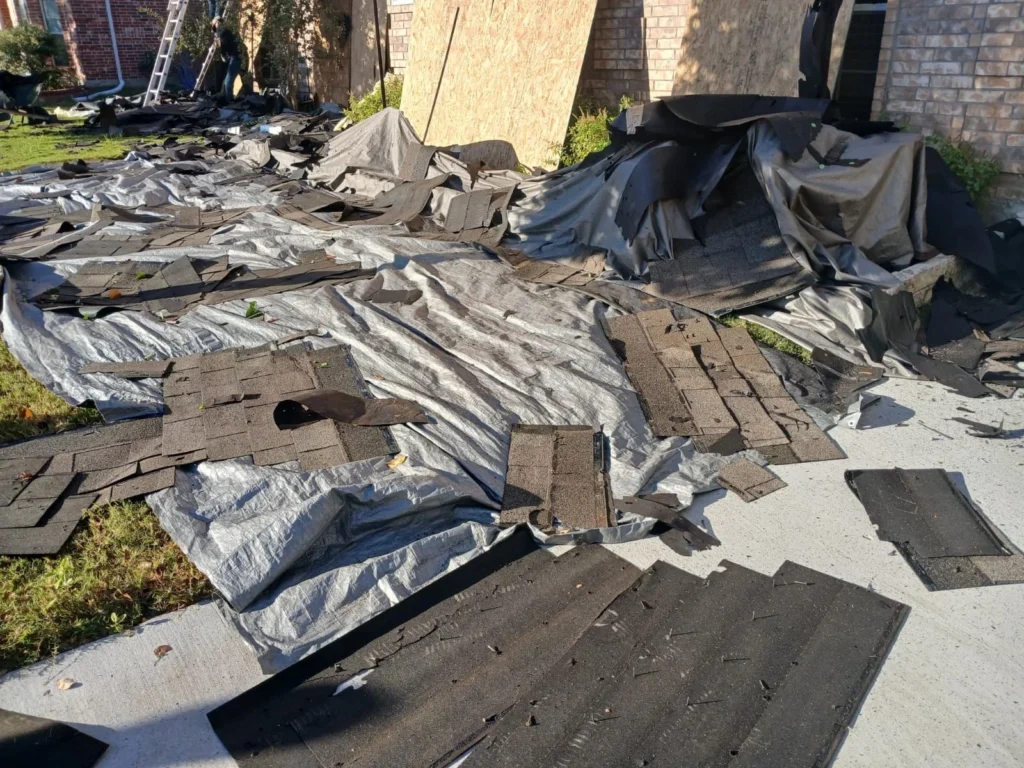
Before the call
Weathered, lifted, and worn, documented before any work.
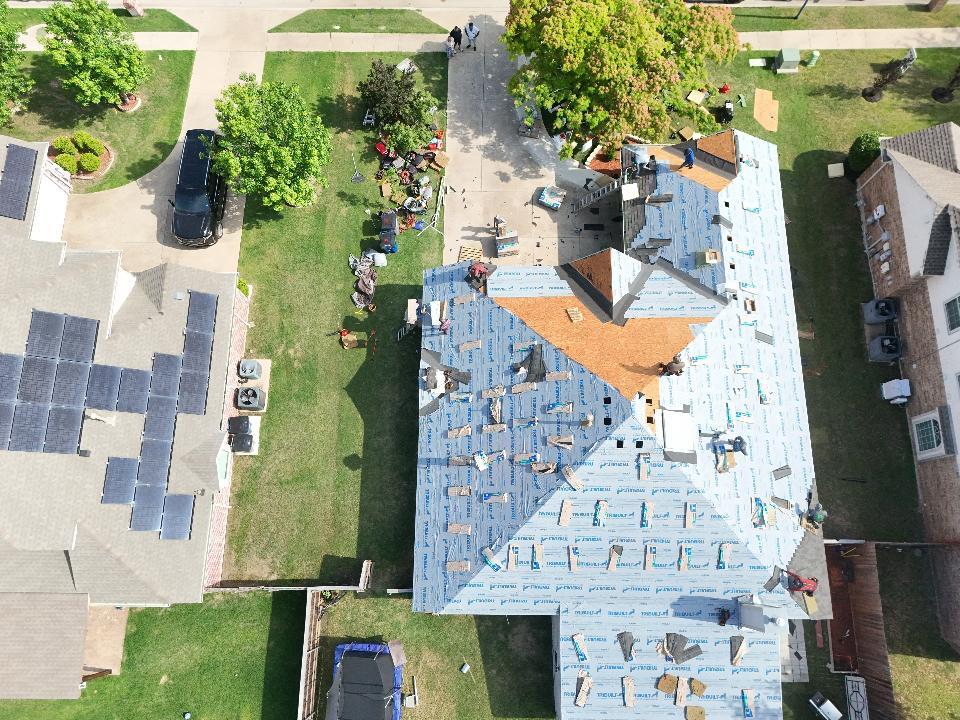
Underlayment going down
Synthetic underlayment sealed across the deck before the first course.
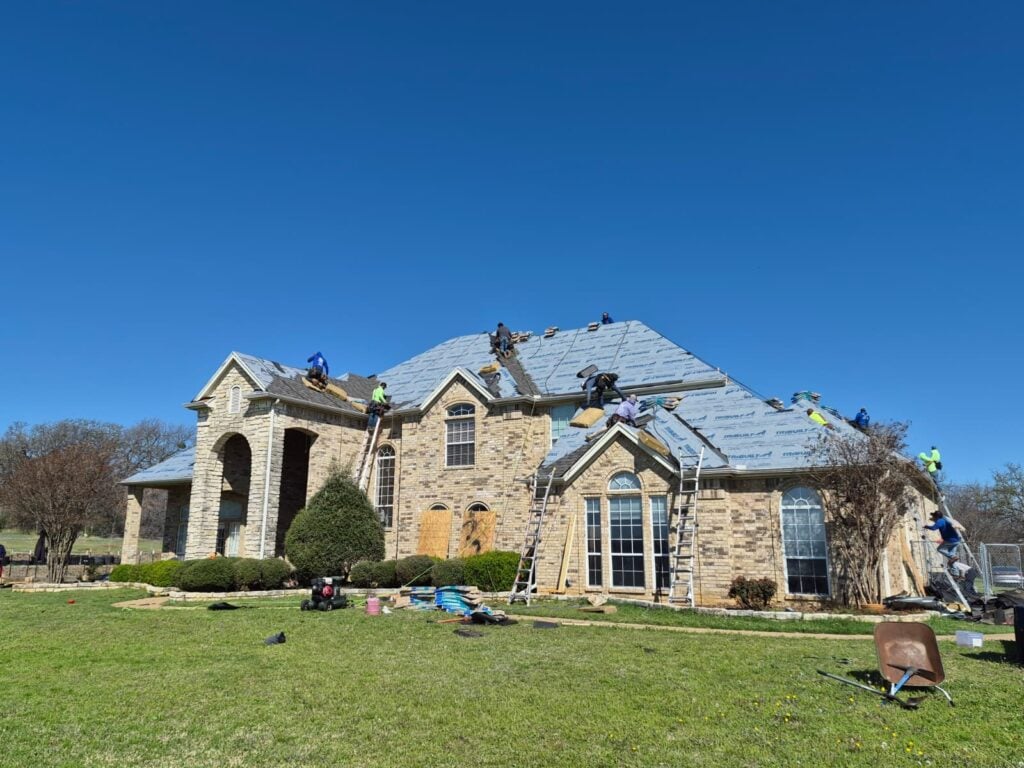
Deck to dry-in
Fresh decking checked and papered in before shingles.
PUBLIC RECORD
The hail and housing record in Grand Prairie
Before you plan emergency roof repair in Grand Prairie, it helps to know what the public record says about local hail and the age of the homes.
45
Hail days, 1 in.+ since 2006
16
Golf-ball-size hail days
4 in.
Largest stone on record
1992
Median year homes built
Hail near Grand Prairie
Hail is a regular event around Grand Prairie. NOAA's Storm Events Database lists 45 separate days since 2006 with hail one inch or larger reported within 8 miles of the city, and on 16 of those days the stones reached golf ball size or bigger. Hail that size was reported in 16 of the last 20 years. The largest stones on record nearby measured 4 inches (grapefruit size) on June 12, 2023. The most recent report: 1-inch hail on May 24, 2026.
June 12, 2023: 4-inch hail (grapefruit size)
May 27, 2024: 3.25-inch hail (teacup size)
April 25, 2026: 3-inch hail (teacup size)
June 13, 2012: 3-inch hail (teacup size)
May 24, 2011: 2.75-inch hail (baseball size)
How old Grand Prairie homes are
The median home in Grand Prairie was built in 1992, and 31% of the city's 71,853 housing units predate 1980. Many of these houses are likely on their second roof or nearing the point where they need one.
Sources: NOAA National Centers for Environmental Information, Storm Events Database (hail reports since 2006 within 8 miles of Grand Prairie); U.S. Census Bureau, American Community Survey 2020–2024 5-year estimates. Data pulled September 2026.
We don't waive deductibles; nobody legally can. Texas law requires
homeowners to pay their insurance deductible (Tex. Ins. Code ch. 707). If a roofer offers
to "cover" or "absorb" yours, walk away. It puts your claim at risk and may be a felony
for the contractor.
We document damage, provide repair and replacement estimates, and meet your
adjuster on-site to answer construction questions. We are not a public adjuster
and do not interpret your insurance policy or negotiate claim value on your behalf.
Common questions about emergency roof repair in Grand Prairie
How fast can you get to an emergency in Grand Prairie?
Emergency calls get priority scheduling and honest dispatch estimates when you call. We would rather tell you a real time than a comfortable one.
Should I tarp my roof myself?
No. Please stay off a wet or damaged roof. Move belongings, catch water, and if a ceiling bulges with pooled water, a small drain hole releases it safely. Leave the roof to the crew.
Does emergency tarping damage the roof?
Proper tarping does not. It is installed to protect the roof and come off cleanly when the permanent repair happens.
Do mature trees around our Grand Prairie home affect the roof?
Constantly. Canopy debris loads gutters and valleys, branches abrade shingles in every wind event, and shade-side slopes hold moisture longer. Trimming to clearance and keeping drainage clear are the two cheapest roof-life extensions in established neighborhoods.
How often does hail hit Grand Prairie?
NOAA's Storm Events Database lists 45 days since 2006 with hail one inch or larger reported within 8 miles of Grand Prairie, including 16 days with golf ball size stones or bigger. Hail that size was reported in 16 of the last 20 years. The most recent report was 1-inch hail on May 24, 2026.
How old are most homes in Grand Prairie?
The median home in Grand Prairie was built in 1992, according to the U.S. Census Bureau's American Community Survey. 31% of the city's housing units predate 1980 and 17% were built in 2010 or later. Many homes here are reaching the age when original roofs come due.