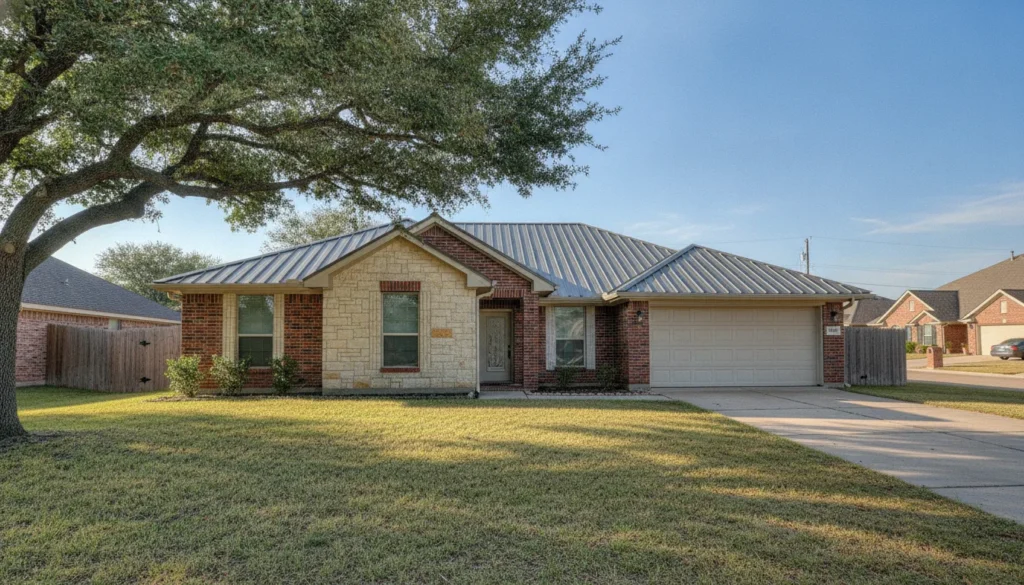
Standing seam is the premium residential metal system in Lake Dallas: concealed fasteners, clean vertical lines, and panels that expand and contract without loosening, which is the failure mode that ages exposed-fastener systems.
The concealed-fastener design is the point: no exposed screws to back out or gasket-fail under DFW thermal cycling, panels that float on clips as temperatures swing, and a look that suits both modern and traditional Lake Dallas architecture. It costs more than exposed-fastener metal and repays it in service life and lower maintenance.
We install and service standing seam metal roofing across Lake Dallas and the surrounding DFW communities. The work comes with free written estimates, documented inspections, and honest guidance on whether this system actually fits your home and budget.
What is different in Lake Dallas
The honest starting point for Standing Seam Metal Roofing in Lake Dallas is the street you live on, not the sample board. The ring towns mix housing eras freely: a 1970s ranch, a 1990s two-story, and a this-year build can share one street, and each takes this system differently. Those roofs take metal well, provided the substrate checks out. Once it is on, the hail conversation changes from replacement to cosmetic dents.
Lake Dallas handles roofing permits the way most Denton County cities do: required where structure or full replacement is involved, quick when the paperwork is right. We file it. The weather here is not hypothetical: steel takes cosmetic dents and keeps the water out, a trade most metal owners accept happily. Nearby Denton and Lewisville see the same crews and the same spec. The install you would get has local addresses attached. One inspection turns the general case into your case, with photos and numbers attached.
THE SYSTEM
Standing Seam Metal Roofing, up close.
Standing seam metal. Wide flat pans, concealed fasteners: the profile that shrugs off hail seasons.
PUBLIC RECORD
The local record behind Standing Seam Metal Roofing in Lake Dallas
How a roof system holds up in Lake Dallas depends on the storms it has to take and the houses it sits on. Here is what the public record shows.
20
Hail days, 1 in.+ since 2006
6
Golf-ball-size hail days
2.75 in.
Largest stone on record
1998
Median year homes built
Hail near Lake Dallas
NOAA's Storm Events Database lists 20 days since 2006 with hail one inch or larger reported within 4 miles of Lake Dallas. On 6 of those days, the stones were golf ball size or bigger. Hail that size was reported in 12 of the last 20 years. The largest stones on record nearby measured 2.75 inches (baseball size) on March 26, 2017. The most recent report: 1-inch hail on June 8, 2025.
March 26, 2017: 2.75-inch hail (baseball size)
April 11, 2016: 2.75-inch hail (baseball size)
March 31, 2008: 2.75-inch hail (baseball size)
June 11, 2023: 2.5-inch hail (tennis ball size)
March 14, 2024: 2-inch hail (hen egg size)
How old Lake Dallas homes are
The median home in Lake Dallas was built in 1998. A large share of the city's 3,294 housing units are now old enough that original roofs are coming due, while 14% were built in 2010 or later.
Sources: NOAA National Centers for Environmental Information, Storm Events Database (hail reports since 2006 within 4 miles of Lake Dallas); U.S. Census Bureau, American Community Survey 2020–2024 5-year estimates. Data pulled September 2026.
Common questions about standing seam metal roofing in Lake Dallas
What is the difference between standing seam and regular metal roofing in Lake Dallas?
Fasteners. Standing seam conceals them under raised seams so panels can move with temperature swings; exposed-fastener systems like R-panel screw through the panel face, and those screw points become the maintenance schedule.
How long does standing seam last in Lake Dallas?
Decades beyond asphalt. Typically forty to sixty years with quality coatings, and DFW hail that would total a shingle roof usually leaves standing seam functional.
Do you install this on shops and outbuildings near Lake Dallas?
Yes. Barns, workshops, and outbuildings are first-class projects out here, not afterthoughts, and the material conversation (usually metal-forward) covers them alongside the house.
How often does hail hit Lake Dallas?
NOAA's Storm Events Database lists 20 days since 2006 with hail one inch or larger reported within 4 miles of Lake Dallas, including 6 days with golf ball size stones or bigger. Hail that size was reported in 12 of the last 20 years. The most recent report was 1-inch hail on June 8, 2025.
How old are most homes in Lake Dallas?
The median home in Lake Dallas was built in 1998, according to the U.S. Census Bureau's American Community Survey. 15% of the city's housing units predate 1980 and 14% were built in 2010 or later. Many homes here are reaching the age when original roofs come due.