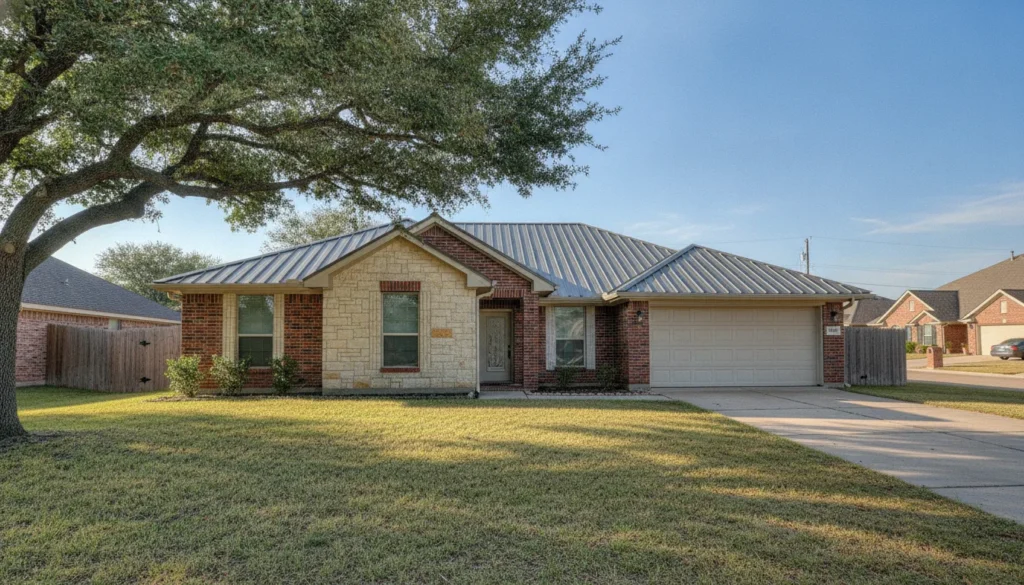
Galvalume-coated steel is the workhorse metal in Allen, the material inside most metal roofing systems, balancing strength, corrosion resistance, and cost.
Most metal roofs in Allen are steel at heart: a galvalume coating of aluminum-zinc alloy over a steel core, finished with paint systems warrantied in decades. The panel profile, whether standing seam, R-panel, or corrugated, matters more to performance than the steel itself, which is why our guides are organized by profile.
What we recommend depends on what the inspection shows, and every inspection is documented with photos. Estimates are free and written. Deductibles are never waived under Texas law, and we are not a public adjuster.
Galvalume steel against Allen’s storm history
Steel’s hail behavior is why it carries most metal work here. Hail an inch or larger hit within 6 miles of Allen on 27 separate days since 2006, and the biggest stone on record measured 4.5 inches on March 24, 2019. Galvalume steel may dent cosmetically in storms like that while the coating and core keep the water out.
Allen’s housing was mostly built between 1980 and 2009, 66 percent of it, which puts a lot of original roofs in this corner of Collin County at or near replacement age. For owners moving from shingles to metal, steel is usually where the value sits, and the profile choice comes next. Our galvalume crews also run jobs in Lucas and Plano.
THE SYSTEM
Steel / Galvalume Roofing, up close.
Standing seam metal. Wide flat pans, concealed fasteners: the profile that shrugs off hail seasons.
PUBLIC RECORD
The local record behind Steel / Galvalume Roofing in Allen
How a roof system holds up in Allen depends on the storms it has to take and the houses it sits on. Here is what the public record shows.
27
Hail days, 1 in.+ since 2006
12
Golf-ball-size hail days
4.5 in.
Largest stone on record
2003
Median year homes built
Hail near Allen
NOAA's Storm Events Database lists 27 days since 2006 with hail one inch or larger reported within 6 miles of Allen. On 12 of those days, the stones were golf ball size or bigger. Hail that size was reported in 13 of the last 20 years. The largest stones on record nearby measured 4.5 inches (softball size) on March 24, 2019. The most recent report: 1-inch hail on March 29, 2025.
March 24, 2019: 4.5-inch hail (softball size)
June 13, 2012: 3.25-inch hail (teacup size)
May 19, 2023: 2.5-inch hail (tennis ball size)
April 21, 2017: 2.5-inch hail (tennis ball size)
March 25, 2025: 2.25-inch hail (hen egg size)
How old Allen homes are
The median home in Allen was built in 2003. A large share of the city's 39,094 housing units are now old enough that original roofs are coming due, while 27% were built in 2010 or later.
Sources: NOAA National Centers for Environmental Information, Storm Events Database (hail reports since 2006 within 6 miles of Allen); U.S. Census Bureau, American Community Survey 2020–2024 5-year estimates. Data pulled September 2026.
Common questions about steel / galvalume roofing in Allen
Will a steel roof rust in Allen?
Modern galvalume coatings resist corrosion for decades; the paint system on top extends that further. Cut edges and scratches are the care points, which is an installation-quality question.
Steel vs aluminum: which is better here?
Inland DFW favors steel: stronger against hail and cheaper. Aluminum's corrosion advantage matters most in coastal salt air, which Allen does not have.
Is upgrading from builder-grade shingles worth it in Allen?
Usually at the first replacement or claim: Class 4 impact-rated systems earn many Texas carriers' premium discounts, and newer communities' HOA standards generally approve them easily. The math works hardest on homes facing decades of DFW hail.
How often does hail hit Allen?
NOAA's Storm Events Database lists 27 days since 2006 with hail one inch or larger reported within 6 miles of Allen, including 12 days with golf ball size stones or bigger. Hail that size was reported in 13 of the last 20 years. The most recent report was 1-inch hail on March 29, 2025.
How old are most homes in Allen?
The median home in Allen was built in 2003, according to the U.S. Census Bureau's American Community Survey. 7% of the city's housing units predate 1980 and 27% were built in 2010 or later. Many homes here are reaching the age when original roofs come due.