After hail or high wind hits McLendon-Chisholm, the right order of operations protects both your roof and your insurance claim: document first, stop active leaks with proper tarping, get a written professional inspection, and only then make claim decisions.
STORM TRIAGE
What do you need help with right now?
Pick the door that matches your situation. It routes you to the right person on the team, and every path starts with a free, documented look at the roof.
Texas law requires homeowners to pay their insurance deductible.
Cedar Crest does not waive or absorb deductibles. If anyone offers to, walk away.
It puts your claim at risk and may be illegal. We document damage, provide estimates,
and meet your adjuster on-site to answer construction questions. We are not a public
adjuster and do not interpret your policy or negotiate claim value.
We document storm damage in McLendon-Chisholm with photos and measurements, provide written estimates, and meet your adjuster on-site to answer construction questions. We are not a public adjuster: we do not interpret your policy or negotiate claim value. Texas law draws that line and we respect it. And we never offer to waive deductibles; that practice is illegal in Texas.
Roofing in McLendon-Chisholm, specifically
McLendon-Chisholm roofing runs at the premium end of the DFW market. That means larger and more complex roof geometries, a higher share of tile, slate-profile, metal, and premium composite systems, and architectural review processes that put material decisions in front of an HOA or design authority before a crew is ever scheduled. The insurance picture is distinctive too: high dwelling values in Rockwall County usually mean percentage-based wind and hail deductibles, which changes the claim math and makes impact-rated systems and documented condition baselines worth genuinely more here.
The same crews cover Rockwall, Fate and Heath, which keeps McLendon-Chisholm scheduling flexible when storm weeks compress everyone’s calendar.
FROM OUR CREWS
The crews you'd actually get.
Real Cedar Crest crews on DFW roofs. Every project photo below is from our own jobs.
Documented, not guessed
Damage marked and photographed before the estimate.
Section by section
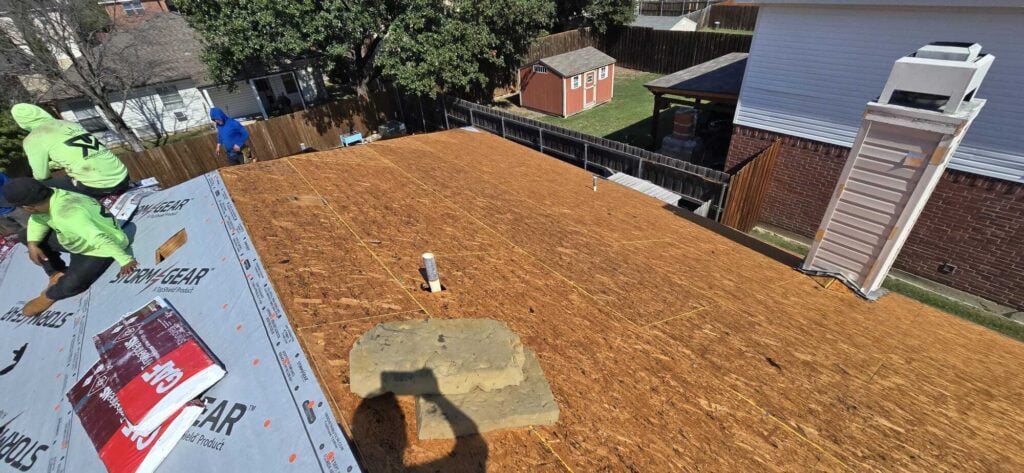
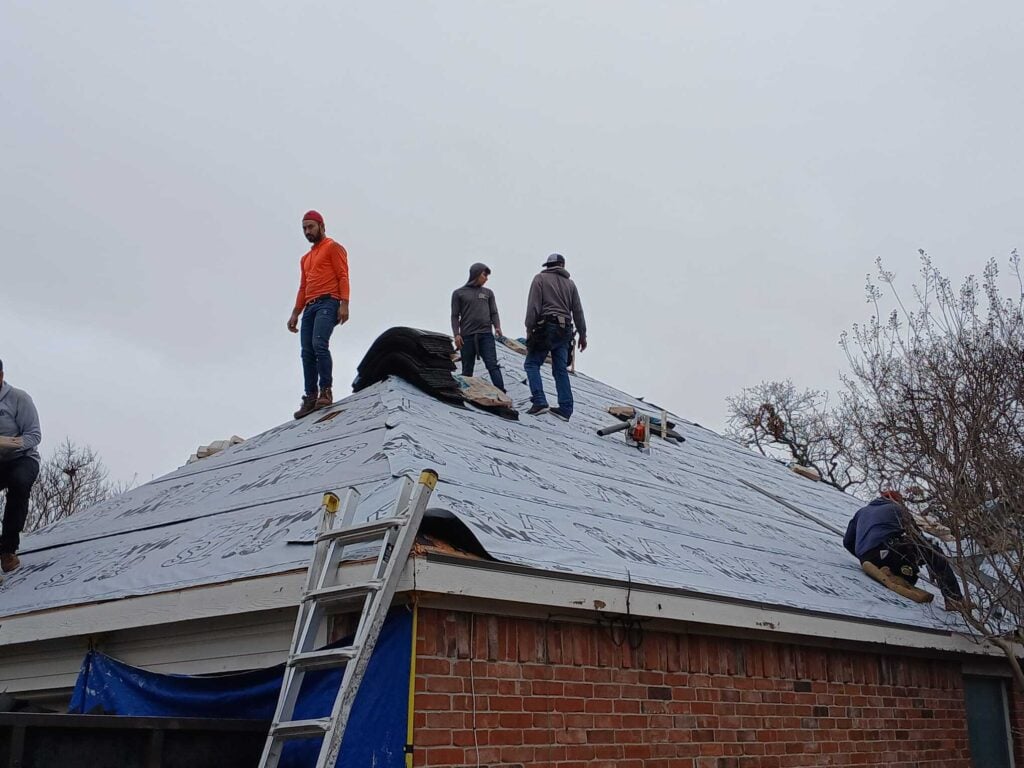
The crew working a plane at a time: staged, sequenced, tidy.
Section by section
The crew working a plane at a time: staged, sequenced, tidy.
PUBLIC RECORD
The hail and housing record in McLendon-Chisholm
Before you plan storm & hail damage in McLendon-Chisholm, it helps to know what the public record says about local hail and the age of the homes.
9
Hail days, 1 in.+ since 2006
3
Golf-ball-size hail days
3 in.
Largest stone on record
2013
Median year homes built
Hail near McLendon-Chisholm
Reported hail is less frequent around McLendon-Chisholm: NOAA lists 9 days since 2006 with hail one inch or larger within 5 miles. Fewer reports can also reflect fewer storm spotters in smaller communities, so a quiet record is not a guarantee. Hail that size was reported in 4 of the last 20 years. The largest stones on record nearby measured 3 inches (teacup size) on April 3, 2012. The most recent report: 2-inch hail on April 27, 2026.
April 3, 2012: 3-inch hail (teacup size)
December 13, 2022: 2.5-inch hail (tennis ball size)
April 27, 2026: 2-inch hail (hen egg size)
April 20, 2023: 1.5-inch hail (walnut size)
March 4, 2026: 1-inch hail (quarter size)
How old McLendon-Chisholm homes are
McLendon-Chisholm is young by roofing standards: the median home was built in 2013, and 60% of its 1,503 housing units date to 2010 or later. Many of those homes still have the roof the builder installed, now working through its first hail seasons.
Sources: NOAA National Centers for Environmental Information, Storm Events Database (hail reports since 2006 within 5 miles of McLendon-Chisholm); U.S. Census Bureau, American Community Survey 2020–2024 5-year estimates. Data pulled September 2026.
We don't waive deductibles; nobody legally can. Texas law requires
homeowners to pay their insurance deductible (Tex. Ins. Code ch. 707). If a roofer offers
to "cover" or "absorb" yours, walk away. It puts your claim at risk and may be a felony
for the contractor.
We document damage, provide repair and replacement estimates, and meet your
adjuster on-site to answer construction questions. We are not a public adjuster
and do not interpret your insurance policy or negotiate claim value on your behalf.
Common questions about storm & hail damage in McLendon-Chisholm
How do I know if my roof in McLendon-Chisholm has hail damage?
Ground-level clues include dented gutters and vents, but the damage that matters (shingle bruising and granule displacement) needs an on-roof inspection. Ours are free and documented with photos.
Should I file an insurance claim after every storm in McLendon-Chisholm?
No. File when documented damage justifies it. An inspection first protects you both ways: real damage gets properly documented, and a healthy roof avoids an unnecessary claim on your record.
A door-knocker offered to cover my deductible. Is that legit?
No. Texas law requires homeowners to pay their deductible, and contractors offering to waive or absorb it are breaking the law and putting your claim at risk. Walk away.
How does a percentage deductible change our McLendon-Chisholm claim?
On high dwelling values, a 1–2% wind/hail deductible is a five-figure number, which changes when filing makes sense and makes impact-rated roofing and documented baselines worth genuinely more. We walk that math before storm season, not after.
How often does hail hit McLendon-Chisholm?
NOAA lists 9 days since 2006 with hail one inch or larger within 5 miles of McLendon-Chisholm. Smaller communities have fewer storm spotters, so reports tend to undercount what actually falls. The most recent report was 2-inch hail on April 27, 2026.
How old are most homes in McLendon-Chisholm?
The median home in McLendon-Chisholm was built in 2013, according to the U.S. Census Bureau's American Community Survey. 6% of the city's housing units predate 1980 and 60% were built in 2010 or later. Many homes here still have their original builder-installed roof.