After hail or high wind hits North Richland Hills, the right order of operations protects both your roof and your insurance claim: document first, stop active leaks with proper tarping, get a written professional inspection, and only then make claim decisions.
STORM TRIAGE
What do you need help with right now?
Pick the door that matches your situation. It routes you to the right person on the team, and every path starts with a free, documented look at the roof.
Texas law requires homeowners to pay their insurance deductible.
Cedar Crest does not waive or absorb deductibles. If anyone offers to, walk away.
It puts your claim at risk and may be illegal. We document damage, provide estimates,
and meet your adjuster on-site to answer construction questions. We are not a public
adjuster and do not interpret your policy or negotiate claim value.
After a storm in North Richland Hills, we document the damage with photos and measurements, provide a free written estimate, and meet your adjuster on-site to answer construction questions. We are not a public adjuster: we do not interpret your policy or negotiate claim value. Texas law draws that line and we respect it. We also never offer to waive deductibles, a practice that is illegal in Texas.
The North Richland Hills Hail Record
Within 5 miles of North Richland Hills there have been 30 days of hail an inch or larger since 2006, and 8 of those days brought golf-ball-size stones or bigger. Hail at that size fell in 14 of the last 20 years. The largest recorded stone measured 3.0 inches on April 28, 2021, a size that can crack shingles and dent metal on the same roof.
Repeat storms make documentation the core of the job. With a median build year of 1986 and 35 percent of homes built before 1980, many roofs here carry older wear and prior repairs, and an adjuster needs to see exactly what the latest storm did. Our photographed inspections separate the two, which is what keeps a Tarrant County claim clean. The same crews cover Watauga and Hurst, and every report we hand over is yours to share with your insurer.
FROM OUR CREWS
The crews you'd actually get.
Real Cedar Crest crews on DFW roofs. Every project photo below is from our own jobs.
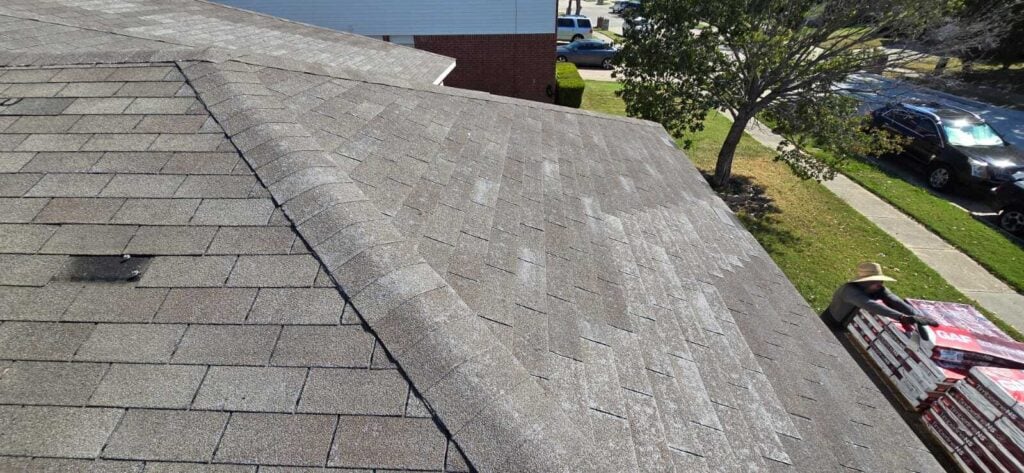
Documented, not guessed
Damage marked and photographed before the estimate.
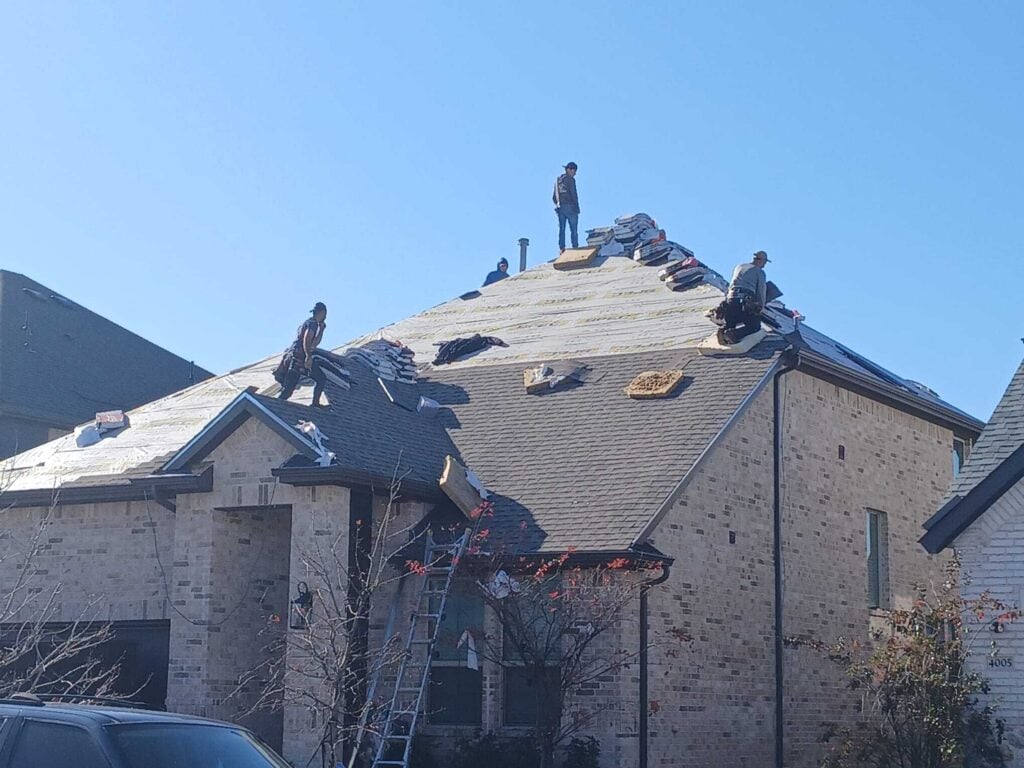
Hands on the roof
A real Cedar Crest crew on a real DFW job. Every project photo is our own.
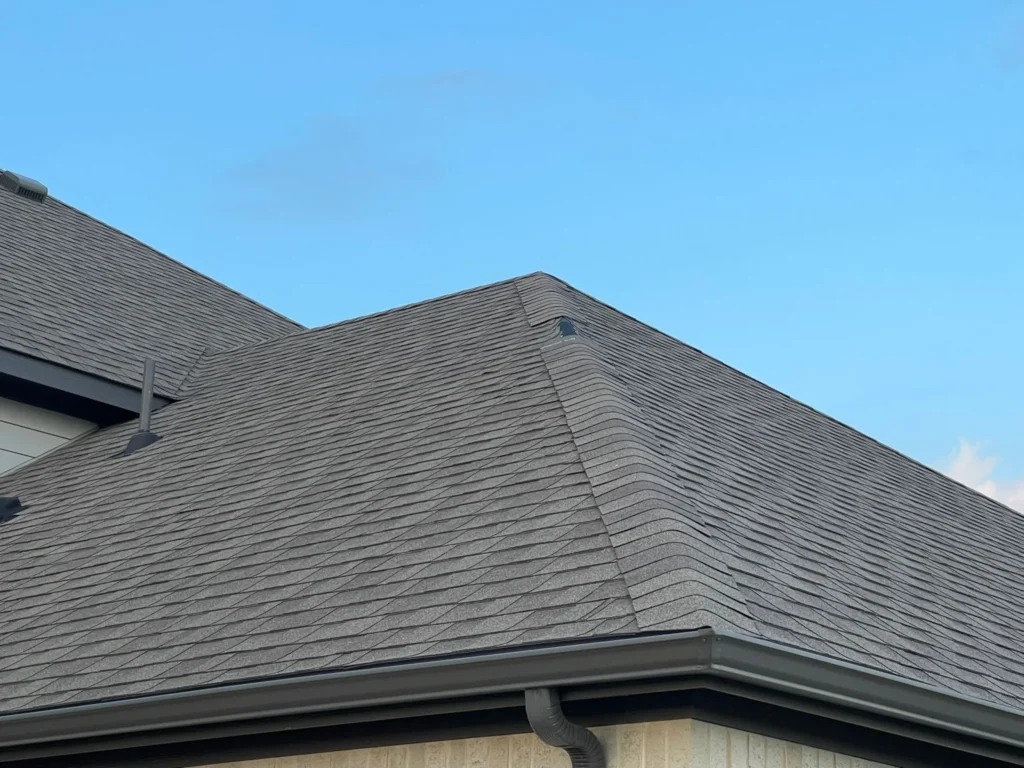
Curb view
How the finished roof reads from the street.
PUBLIC RECORD
The hail and housing record in North Richland Hills
Before you plan storm & hail damage in North Richland Hills, it helps to know what the public record says about local hail and the age of the homes.
30
Hail days, 1 in.+ since 2006
8
Golf-ball-size hail days
3 in.
Largest stone on record
1986
Median year homes built
Hail near North Richland Hills
NOAA's Storm Events Database lists 30 days since 2006 with hail one inch or larger reported within 5 miles of North Richland Hills. On 8 of those days, the stones were golf ball size or bigger. Hail that size was reported in 14 of the last 20 years. The largest stones on record nearby measured 3 inches (teacup size) on April 28, 2021. The most recent report: 1-inch hail on May 25, 2026.
April 28, 2021: 3-inch hail (teacup size)
April 13, 2007: 3-inch hail (teacup size)
May 27, 2024: 2.75-inch hail (baseball size)
April 19, 2011: 2-inch hail (hen egg size)
March 30, 2009: 2-inch hail (hen egg size)
How old North Richland Hills homes are
The median home in North Richland Hills was built in 1986, and 35% of the city's 28,897 housing units predate 1980. Many of these houses are likely on their second roof or nearing the point where they need one.
Sources: NOAA National Centers for Environmental Information, Storm Events Database (hail reports since 2006 within 5 miles of North Richland Hills); U.S. Census Bureau, American Community Survey 2020–2024 5-year estimates. Data pulled September 2026.
We don't waive deductibles; nobody legally can. Texas law requires
homeowners to pay their insurance deductible (Tex. Ins. Code ch. 707). If a roofer offers
to "cover" or "absorb" yours, walk away. It puts your claim at risk and may be a felony
for the contractor.
We document damage, provide repair and replacement estimates, and meet your
adjuster on-site to answer construction questions. We are not a public adjuster
and do not interpret your insurance policy or negotiate claim value on your behalf.
Common questions about storm & hail damage in North Richland Hills
How do I know if my roof in North Richland Hills has hail damage?
Ground-level clues include dented gutters and vents, but the damage that matters (shingle bruising and granule displacement) needs an on-roof inspection. Ours are free and documented with photos.
Should I file an insurance claim after every storm in North Richland Hills?
No. File when documented damage justifies it. An inspection first protects you both ways: real damage gets properly documented, and a healthy roof avoids an unnecessary claim on your record.
A door-knocker offered to cover my deductible. Is that legit?
No. Texas law requires homeowners to pay their deductible, and contractors offering to waive or absorb it are breaking the law and putting your claim at risk. Walk away.
Do mature trees around our North Richland Hills home affect the roof?
Constantly. Canopy debris loads gutters and valleys, branches abrade shingles in every wind event, and shade-side slopes hold moisture longer. Trimming to clearance and keeping drainage clear are the two cheapest roof-life extensions in established neighborhoods.
How often does hail hit North Richland Hills?
NOAA's Storm Events Database lists 30 days since 2006 with hail one inch or larger reported within 5 miles of North Richland Hills, including 8 days with golf ball size stones or bigger. Hail that size was reported in 14 of the last 20 years. The most recent report was 1-inch hail on May 25, 2026.
How old are most homes in North Richland Hills?
The median home in North Richland Hills was built in 1986, according to the U.S. Census Bureau's American Community Survey. 35% of the city's housing units predate 1980 and 12% were built in 2010 or later. Many homes here are reaching the age when original roofs come due.