
Skip to content
Free Inspection Documented findings with photos, in writing, before storm season rather than after. Documented findings, in writing. Book yours →
FAMILY-OWNED IN DFW · 5-YEAR WRITTEN WORKMANSHIP WARRANTY, TRANSFERABLE5-YEAR WRITTEN WARRANTY
[ CLAY TILE ROOFING · FLOWER MOUND ]DFW METROPLEX · TX

Flower Mound, TX

Clay Tile Roofing in Flower Mound

Recommended by DFW homeownersRead their words →
Service infoDFW · est. 2023
  • (469) 405-7870
  • Serving the entire DFW metroplex. We come to you
  • Mon–Sat · 7:30 AM – 6:30 PM
  • 5-Year Written Workmanship Warranty, transferable
  • Family-owned & operated · residential + commercial
Direct answer

Clay tile is the original: the terracotta barrel and flat profiles that define Spanish and Mediterranean homes in Flower Mound, fired to a color that never fades.

The color of clay tile runs all the way through the material rather than sitting on top as a coating, so a clay roof in Flower Mound looks the same in year forty as it did in year four. Clay is lighter than concrete tile but more brittle, costs more, and rewards installers who handle it with care. On architecture designed for it, nothing else looks right. Cedar Crest offers a free written estimate for clay tile, and the inspection we perform is documented with photos. We do not waive deductibles, since Texas law prohibits it, and we are not a public adjuster.

Clay tile and Flower Mound storms

Brittleness is the question clay has to answer in Flower Mound. Hail an inch or larger has fallen within 7 miles of the city on 34 days since 2006, and 15 of those days brought golf-ball stones or bigger. The record is 4.25 inches, set on June 11, 2023. Big stones can crack tile, so our post-storm checks include the attic side as well as the surface. Framing is the other half. Flower Mound’s homes are mostly from 1980 through 2009, with a median year of 1997, and clay belongs on the ones built with its weight and style in mind. We serve Denton County and send the same crews to Highland Village and Double Oak.
THE SYSTEM

Clay Tile Roofing, up close.

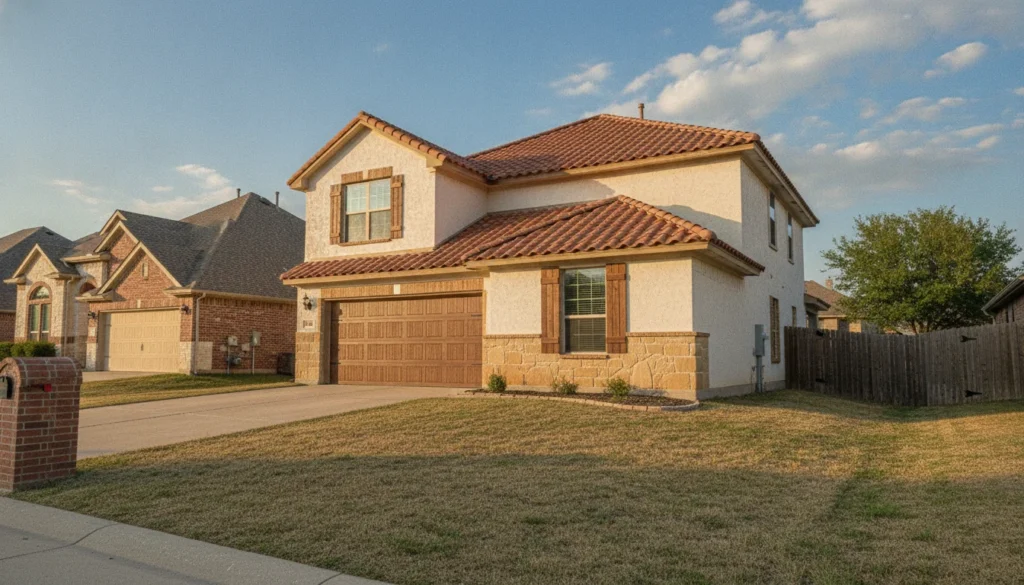
A terracotta S-profile clay tile roof on a two-story Mediterranean-style stucco and stone home in a North Texas suburb. The tiles lie in straight staggered courses with correct headlap — every course overlapping the one below, pan and cover curves alternating evenly, natural kiln color variation from tile to tile across orange, rust, and brown, mortar-set ridge and hip caps running crisp along the peaks, round bird-stop closures visible along the eave row. Late-afternoon warm light raking across the barrels so each tile casts a curved shadow into its neighbor's pan.
Clay tile. S-profile courses with proper headlap and mortared caps, good for decades of Texas service.
PUBLIC RECORD

The local record behind Clay Tile Roofing in Flower Mound

How a roof system holds up in Flower Mound depends on the storms it has to take and the houses it sits on. Here is what the public record shows.

34
Hail days, 1 in.+ since 2006
15
Golf-ball-size hail days
4.25 in.
Largest stone on record
1997
Median year homes built

Hail near Flower Mound

NOAA's Storm Events Database lists 34 days since 2006 with hail one inch or larger reported within 7 miles of Flower Mound. On 15 of those days, the stones were golf ball size or bigger. Hail that size was reported in 14 of the last 20 years. The largest stones on record nearby measured 4.25 inches (grapefruit size) on June 11, 2023. The most recent report: 1.25-inch hail on April 28, 2026.

How old Flower Mound homes are

The median home in Flower Mound was built in 1997. A large share of the city's 28,789 housing units are now old enough that original roofs are coming due, while 21% were built in 2010 or later.

Sources: NOAA National Centers for Environmental Information, Storm Events Database (hail reports since 2006 within 7 miles of Flower Mound); U.S. Census Bureau, American Community Survey 2020–2024 5-year estimates. Data pulled September 2026.

Common questions about clay tile roofing in Flower Mound

Clay vs concrete tile in Flower Mound: what is the real difference?

Clay holds color permanently and weighs less but costs more and is more brittle; concrete is tougher and cheaper with color that mellows over decades. Both need structure rated for tile weight.

Is clay tile practical in DFW hail?

Clay can crack in significant hail, though individual tiles replace readily, which is the system's design logic. Owners committed to the look accept occasional tile replacement as part of a fifty-year roof.

Is upgrading from builder-grade shingles worth it in Flower Mound?

Usually at the first replacement or claim: Class 4 impact-rated systems earn many Texas carriers' premium discounts, and newer communities' HOA standards generally approve them easily. The math works hardest on homes facing decades of DFW hail.

How often does hail hit Flower Mound?

NOAA's Storm Events Database lists 34 days since 2006 with hail one inch or larger reported within 7 miles of Flower Mound, including 15 days with golf ball size stones or bigger. Hail that size was reported in 14 of the last 20 years. The most recent report was 1.25-inch hail on April 28, 2026.

How old are most homes in Flower Mound?

The median home in Flower Mound was built in 1997, according to the U.S. Census Bureau's American Community Survey. 5% of the city's housing units predate 1980 and 21% were built in 2010 or later. Many homes here are reaching the age when original roofs come due.

Clay Tile Roofing across DFW · All roofing services in Flower Mound

Get a free estimate in Flower Mound.

No pressure, no door knockers. We look at the roof, tell you what it needs (and what it doesn't), and put the number in writing.

5-Year Written Workmanship Warranty Family-owned & operated Recommended by DFW homeowners

Payment plans available. The amount never changes, only the timing.

Need clay tile roofing in Flower Mound?

Call (469) 405-7870 Free Estimate