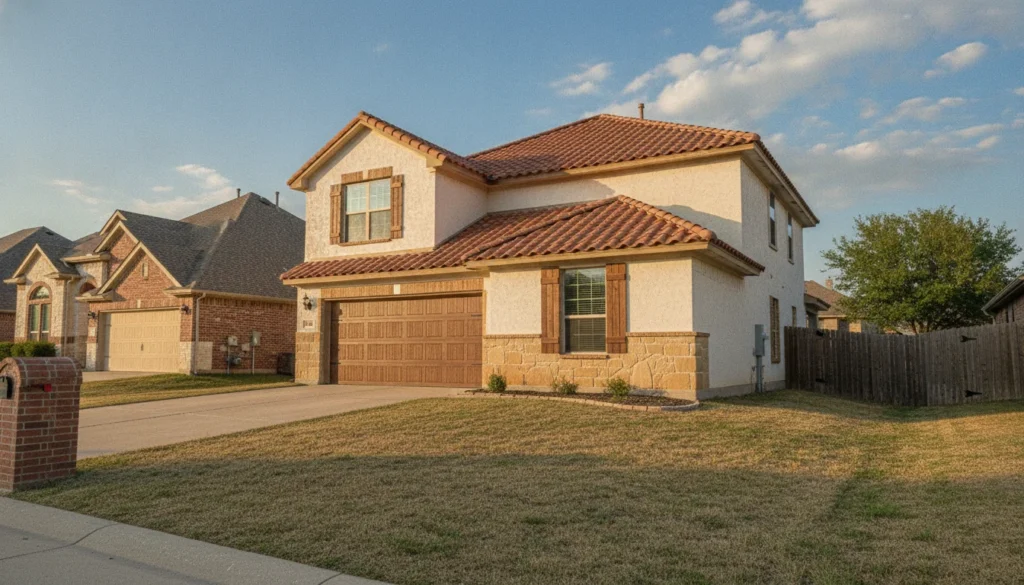
Clay tile is the original: the terracotta barrel and flat profiles that define Spanish and Mediterranean homes in University Park, fired to a color that never fades.
Clay’s color is the material, not a coating, so a clay roof in University Park looks the same in year forty as year four. It is lighter than concrete tile but more brittle, costs more, and rewards installers who respect its handling. On architecture built for it, nothing else looks right.
We install and service clay tile roofing across University Park and the surrounding DFW communities. Expect free written estimates, documented inspections, and honest guidance on whether this system actually fits your home and budget.
How University Park changes the math
Clay Tile Roofing behaves differently on University Park roofs than the brochure version suggests. These are streets where roofs have been replaced before, which means layered history, patched decking, and flashing choices from three owners ago. Tile on that stock is a structural conversation first (the deck and framing have to carry the load) and an aesthetic one second.
City paperwork in University Park is ours to carry: permit filed, inspection booked, final documentation in your folder. Hail is the tax every DFW roof eventually pays, and big cores can crack concrete tile, which is why post-storm checks here include the attic side, not just the surface. We work this system in Dallas and Irving as well. Ask and we will point you at nearby examples with a few years of weather on them. The next step costs nothing: a documented inspection and a straight answer on whether this system fits.
THE SYSTEM
Clay Tile Roofing, up close.
Clay tile. S-profile courses with proper headlap and mortared caps, good for decades of Texas service.
PUBLIC RECORD
The local record behind Clay Tile Roofing in University Park
How a roof system holds up in University Park depends on the storms it has to take and the houses it sits on. Here is what the public record shows.
12
Hail days, 1 in.+ since 2006
3
Golf-ball-size hail days
2.75 in.
Largest stone on record
1990
Median year homes built
Hail near University Park
Reported hail is less frequent around University Park: NOAA lists 12 days since 2006 with hail one inch or larger within 4 miles. Fewer reports can also reflect fewer storm spotters in smaller communities, so a quiet record is not a guarantee. Hail that size was reported in 7 of the last 20 years. The largest stones on record nearby measured 2.75 inches (baseball size) on June 13, 2012. The most recent report: 1-inch hail on May 23, 2026.
June 13, 2012: 2.75-inch hail (baseball size)
May 24, 2011: 2.75-inch hail (baseball size)
July 8, 2009: 1.75-inch hail (golf ball size)
June 1, 2019: 1.5-inch hail (walnut size)
September 24, 2023: 1.25-inch hail (half dollar size)
How old University Park homes are
The median home in University Park was built in 1990, and 37% of the city's 7,444 housing units predate 1980. Many of these houses are likely on their second roof or nearing the point where they need one.
Sources: NOAA National Centers for Environmental Information, Storm Events Database (hail reports since 2006 within 4 miles of University Park); U.S. Census Bureau, American Community Survey 2020–2024 5-year estimates. Data pulled September 2026.
Common questions about clay tile roofing in University Park
Clay vs concrete tile in University Park: what is the real difference?
Clay holds color permanently and weighs less but costs more and is more brittle; concrete is tougher and cheaper with color that mellows over decades. Both need structure rated for tile weight.
Is clay tile practical in DFW hail?
Clay can crack in significant hail, though individual tiles replace readily, which is the system's design logic. Owners committed to the look accept occasional tile replacement as part of a fifty-year roof.
Can you match the premium materials common in University Park?
That's our premium catalog's home turf: tile, standing seam, stone-coated steel, and composite slate and shake, installed to manufacturer specification with the documentation the home's value deserves.
How often does hail hit University Park?
NOAA lists 12 days since 2006 with hail one inch or larger within 4 miles of University Park. Smaller communities have fewer storm spotters, so reports tend to undercount what actually falls. The most recent report was 1-inch hail on May 23, 2026.
How old are most homes in University Park?
The median home in University Park was built in 1990, according to the U.S. Census Bureau's American Community Survey. 37% of the city's housing units predate 1980 and 18% were built in 2010 or later. Many homes here are reaching the age when original roofs come due.