Straight-line winds ahead of DFW storm fronts lift shingle edges, break sealant bonds, and tear tabs off entirely. Wind damage repair in Richland Hills addresses both the visible damage and the broken seals you cannot see from the ground.
STORM TRIAGE
What do you need help with right now?
Pick the door that matches your situation. It routes you to the right person on the team, and every path starts with a free, documented look at the roof.
Texas law requires homeowners to pay their insurance deductible.
Cedar Crest does not waive or absorb deductibles. If anyone offers to, walk away.
It puts your claim at risk and may be illegal. We document damage, provide estimates,
and meet your adjuster on-site to answer construction questions. We are not a public
adjuster and do not interpret your policy or negotiate claim value.
A wind-lifted shingle that looks fine from the street has often lost the seal that keeps the next storm out. After significant gusts in Richland Hills, missing tabs and lifted edges are worth a documented look. Wind is also a covered peril on most homeowner policies.
We work across all of Richland Hills and the surrounding DFW communities. Estimates are free and written, inspections are documented with photos, and Texas’s insurance rules get followed to the letter: we never waive deductibles and we are not public adjusters.
Roofing in Richland Hills, specifically
Richland Hills is established DFW: neighborhoods that have been through multiple roof cycles, mature trees that feed gutters and abrade shingles in every wind event, and a housing stock whose re-roof history varies house by house with the quality of whoever did the last storm season’s work. That history is exactly why documentation matters more here than almost anywhere: separating old wear and prior repairs from fresh storm damage is what makes a Tarrant County claim clean, and it’s what our written, photographed inspections are built to do.
The same crews cover Fort Worth, Arlington and Mansfield, which keeps Richland Hills scheduling flexible when storm weeks compress everyone’s calendar.
FROM OUR CREWS
The crews you'd actually get.
Real Cedar Crest crews on DFW roofs. Every project photo below is from our own jobs.
What the storm left
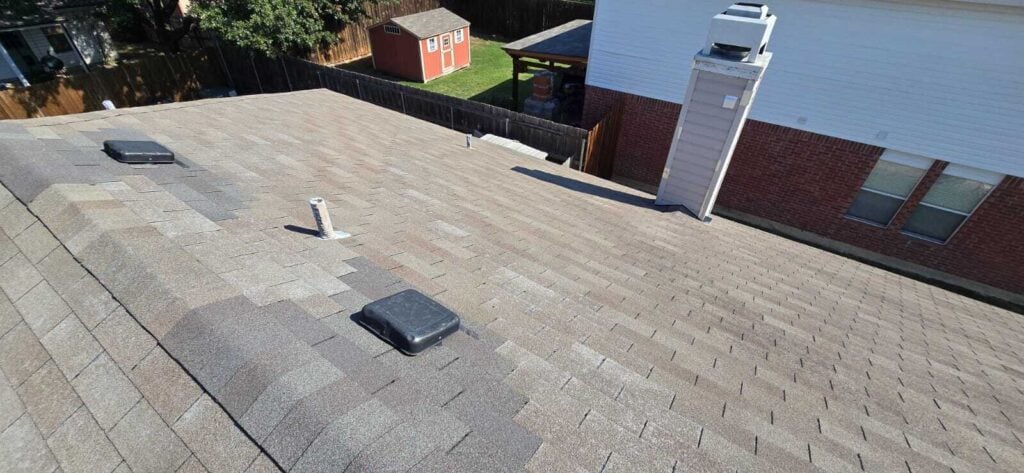
Hail and wind damage, photographed for the file.
Done right
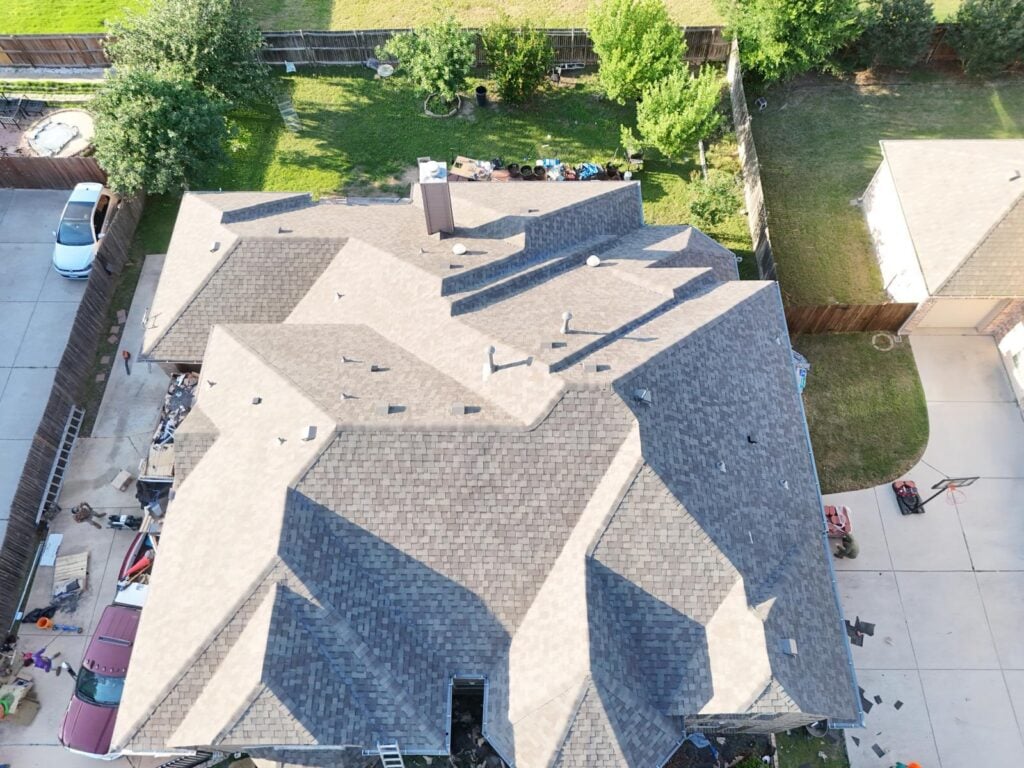
New shingles, straight courses, a cleared yard: a completed DFW re-roof.
On the slope
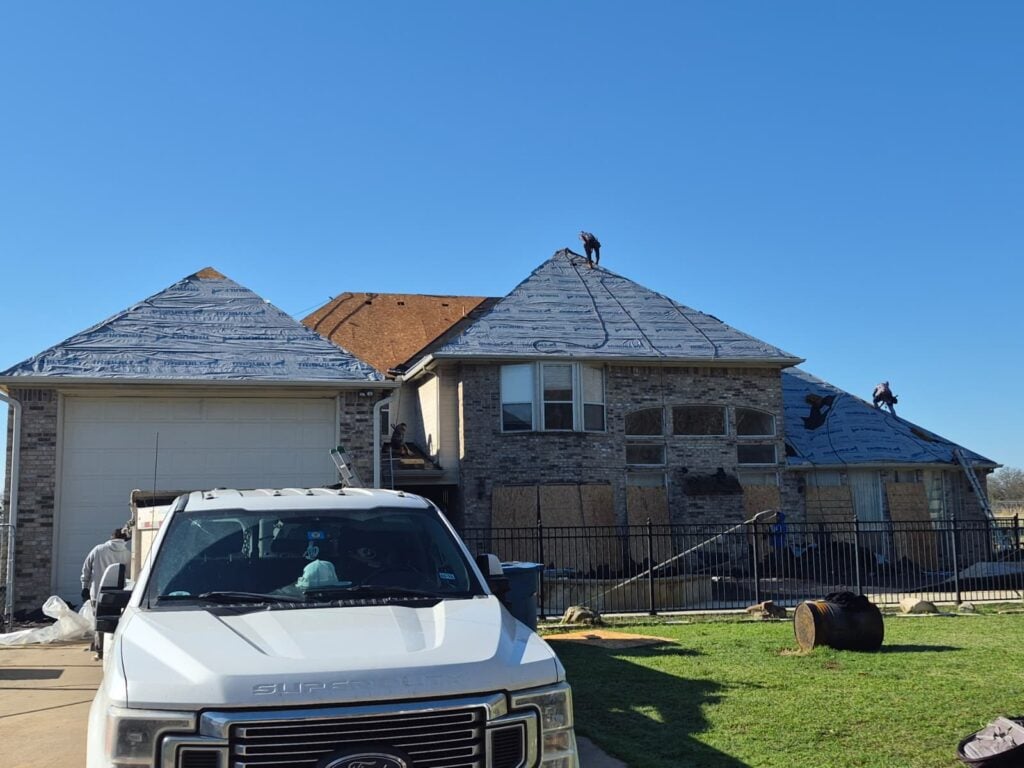
A Cedar Crest crew mid-installation on a DFW re-roof.
PUBLIC RECORD
The hail and housing record in Richland Hills
Before you plan wind damage repair in Richland Hills, it helps to know what the public record says about local hail and the age of the homes.
16
Hail days, 1 in.+ since 2006
4
Golf-ball-size hail days
2.75 in.
Largest stone on record
1959
Median year homes built
Hail near Richland Hills
NOAA's Storm Events Database lists 16 days since 2006 with hail one inch or larger reported within 4 miles of Richland Hills. On 4 of those days, the stones were golf ball size or bigger. Hail that size was reported in 10 of the last 20 years. The largest stones on record nearby measured 2.75 inches (baseball size) on May 27, 2024. The most recent report: 1-inch hail on May 25, 2026.
May 27, 2024: 2.75-inch hail (baseball size)
March 30, 2025: 1.75-inch hail (golf ball size)
April 2, 2023: 1.75-inch hail (golf ball size)
December 27, 2015: 1.75-inch hail (golf ball size)
April 28, 2020: 1.5-inch hail (walnut size)
How old Richland Hills homes are
Half of Richland Hills's 3,420 housing units were built in 1959 or earlier, and 77% predate 1980. On homes that age, today's roof is rarely the original, and older decking, layered repairs and ventilation that was never brought up to date are common.
Sources: NOAA National Centers for Environmental Information, Storm Events Database (hail reports since 2006 within 4 miles of Richland Hills); U.S. Census Bureau, American Community Survey 2020–2024 5-year estimates. Data pulled September 2026.
We don't waive deductibles; nobody legally can. Texas law requires
homeowners to pay their insurance deductible (Tex. Ins. Code ch. 707). If a roofer offers
to "cover" or "absorb" yours, walk away. It puts your claim at risk and may be a felony
for the contractor.
We document damage, provide repair and replacement estimates, and meet your
adjuster on-site to answer construction questions. We are not a public adjuster
and do not interpret your insurance policy or negotiate claim value on your behalf.
Common questions about wind damage repair in Richland Hills
What wind speed damages a roof in Richland Hills?
It depends on the shingle rating, age, and condition. Aging shingles lose the sealant bond that gives them wind resistance, so gusts a new roof shrugs off can strip an older one.
Is wind damage covered by insurance?
Wind is a covered peril on most homeowner policies. The same documentation logic as hail applies: inspect, document with photos, then decide about a claim with real information.
How do I spot wind damage from the ground?
Missing tabs, shingles in the yard, and lifted edges that catch afternoon shadow. The seal damage that matters needs an on-roof look, and ours is free.
Do mature trees around our Richland Hills home affect the roof?
Constantly. Canopy debris loads gutters and valleys, branches abrade shingles in every wind event, and shade-side slopes hold moisture longer. Trimming to clearance and keeping drainage clear are the two cheapest roof-life extensions in established neighborhoods.
How often does hail hit Richland Hills?
NOAA's Storm Events Database lists 16 days since 2006 with hail one inch or larger reported within 4 miles of Richland Hills, including 4 days with golf ball size stones or bigger. Hail that size was reported in 10 of the last 20 years. The most recent report was 1-inch hail on May 25, 2026.
How old are most homes in Richland Hills?
The median home in Richland Hills was built in 1959, according to the U.S. Census Bureau's American Community Survey. 77% of the city's housing units predate 1980 and 3% were built in 2010 or later. Most homes here are well past the life of their original roof.